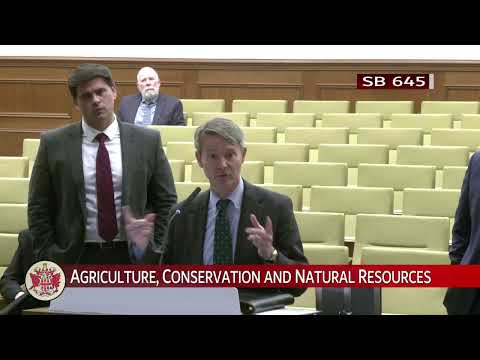
Senate committee advances Stewart substitute to restrict PFAS in biosolids amid heavy debate over feasibility and costs
Loading...
Summary
A Senate substitute would set combined PFOA/PFOS thresholds (25–50 ppb initially) and require continuous monitoring of biosolids; supporters say the glide path protects farmland and public health, opponents—wastewater utilities and county groups—call the substitute technically and fiscally unworkable. The committee reported the substitute for further consideration.
Senator Richard Stewart introduced a substitute to limit PFAS in biosolids, proposing an initial combined threshold of 25–50 parts per billion for PFOA and PFOS, continuous monitoring, and a three‑year glide path to lower limits. Stewart said the change is needed to prevent long‑term contamination of farmland and food chains and to avoid becoming "the dumping ground for DC and Maryland."
The substitute would require testing and monitoring of biosolids and would remove a rolling average approach, Stewart said, so that facilities would not spread particularly high‑PFAS material. "This bill does not stop land application right now. It gives us time to work through that," he told the committee. He said the measure is aligned with Maryland’s proposed threshold and argued that aggressive action is necessary to protect public health.
DEQ and administration representatives told the committee the administration had no formal position and cautioned that available disposal and treatment options are limited. DEQ staff said there is no widely available, affordable technology except high‑temperature incineration and that lined landfill capacity and leachate management present practical constraints. "There's not a scientific conclusion as to what is safe," a DEQ official said, and warned that materials exceeding low thresholds could require incineration or specialized disposal capacity the Commonwealth currently lacks.
Testimony divided sharply. Environmental groups and farmers supported the substitute: Jay Ford of the Chesapeake Bay Foundation said the bill represented "an aggressive timeline" needed to reduce toxins in communities and argued parity with neighboring states is important. Farmers and small‑farm advocates said they had tested fields showing PFAS above EPA draft thresholds and urged action.
Opponents included the Virginia Association of Municipal Wastewater Agencies, the Virginia Farm Bureau Federation, the Virginia Association of Counties and numerous municipal wastewater authorities and utilities. Chris Pomeroy of the wastewater association called the substitute "unworkable," citing inadequate landfill capacity and the multi‑year timeline needed to build high‑temperature incinerators. Localities and utilities warned of steep fiscal impacts and rate increases if land application were suddenly restricted.
Several senators said they supported reporting the substitute so the Senate would have a vehicle for conference and negotiation with the House bill. The committee voted to report the substitute for further consideration; the transcript does not include a final roll call tally for the reported PFAS substitute.
What happens next: the Senate vehicle will allow conferees and stakeholders to continue negotiating thresholds, timelines and disposal pathways. Supporters urged continued technical work on disposal capacity and funding options; opponents urged delaying action until inventories, cost estimates and technology road maps are in hand.