Get Full Government Meeting Transcripts, Videos, & Alerts Forever!
Get email alerts on the Signage topic
No spam. Unsubscribe anytime.
Planning Commission backs 25% window‑signage limit and 90‑day grace period in UDO recommendation
Summary
The commission voted to recommend a UDO amendment requiring permits for window signage and limiting graphic coverage to 25% of each window; commissioners agreed on a 90‑day grace period after City Council approval for businesses that can show vested rights.
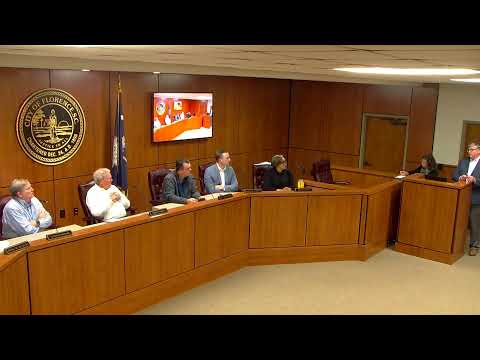
The Florence City Planning Commission voted to recommend to City Council an amendment to the Unified Development Ordinance that would require permits for window signage and limit window graphics to 25% of each window, planning staff said.
In a staff presentation, the proposal was described as a measure to improve downtown and overlay‑district aesthetics by preventing full coverage of storefront windows. As staff put it, "The window signage should not exceed more than 25% of the window on which it's placed." Staff said the change would not be retroactive and that buildings with existing full‑coverage graphics would be considered nonconforming; replacements would have to conform to the new standard.
Commissioners discussed implementation details including outreach, permit fees and a transition period. Staff indicated the permit would use the regular zoning signage application (staff cited a typical fee example of $25) and that an approved permit would be valid for one year. Commissioners debated how long to allow businesses to adapt; a consensus formed in favor of a 90‑day grace period after City Council approval to allow outreach and to protect businesses that can show they are vested. As one commissioner noted, the goal is to give owners time "to make application during that 90 days."
On a motion to adopt the amendment as presented with the 90‑day grace period, the commission voted by voice; the chair announced the ayes have it. The commission's vote was a recommendation to the City Council — final legal effect requires council adoption.
Why it matters: The amendment would create a permitting path and a quantitative limit (25% per window) aimed at balancing business signage and storefront visibility, and it establishes a short transition period to reduce immediate economic harm to businesses that already invested in permanent window graphics.
Next steps: The Planning Commission will forward its recommendation and the suggested 90‑day outreach/grace period to Florence City Council for final action.