
After King Salmon flooding, board backs SBA outreach and asks staff to form recovery ad hoc
Get AI-powered insights, summaries, and transcripts
Subscribe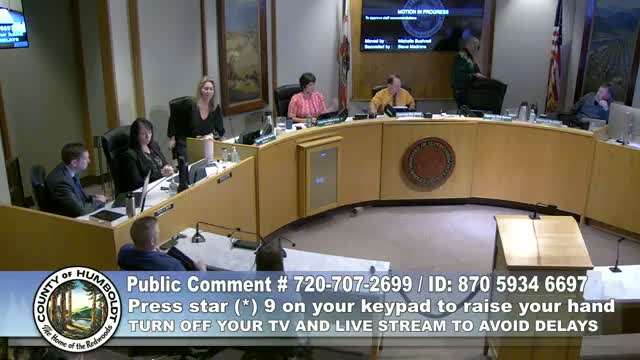
Summary
Following January storm and king‑tide flooding affecting King Salmon and nearby communities, the board heard from COAD and SBA about disaster loan options and local assistance. Supervisors approved an ad hoc to work with OES, COAD and CAO staff to identify recovery gaps and possible county roles.
The Humboldt County Board of Supervisors on Feb. 11 discussed the Jan. storm and king‑tide flooding that affected King Salmon and Fields Landing. Community organizations, county Office of Emergency Services and the Small Business Administration briefed the board on response and assistance options.
COAD and county partners verified more than 40 households experienced major interior flooding and said they are supporting households with temporary housing, debris removal and a local disaster assistance center. COAD representatives and county staff confirmed in‑person SBA loan officers are present at a local assistance center to help homeowners and small businesses apply for disaster assistance.
Danielle Haywood, SBA Public Affairs Specialist for the Office of Disaster Recovery and Resilience, summarized the SBA declaration (California disaster declaration CA‑21431 for the Jan. 31–Jan. 5 incident window), key deadlines and loan terms: physical damage applications are due April 6, 2026; homeowner interest rates are currently about 2.875%; business loans up to $2 million and homeowner loans up to $500,000 are available; renters/homeowners can request up to $100,000 for personal property; and applicants may seek up to an additional 20% for mitigation work to reduce future risk. SBA emphasized there are often no payments and no interest for the first 12 months after loan approval and that approved funds can be available quickly once an application is accepted.
Supervisor Bone had proposed a county 0% interest loan program to help homeowners with deductibles or immediate expenses; board members expressed concern about administrative burden, potential duplication of federal assistance, gift‑of‑public‑funds constraints, and long‑term county obligations. Staff noted the county previously implemented a limited program after the Rio Dell earthquake and that administering a loan program requires substantial staff time. Several community speakers suggested exploring state grant programs (for example, homeowner resilience grants) and third‑party administration by nonprofits to reduce county administrative load.
Supervisor Bushnell moved to direct staff to form an ad hoc (with Supervisors Bushnell and Bridal, working with Sheriff/OES, CAO and COAD) to evaluate disaster recovery gaps, options for county support and potential program design; the motion was seconded and approved by unanimous consent. Staff will return with recommendations and scope for the ad hoc and any proposed program parameters.