Get Full Government Meeting Transcripts, Videos, & Alerts Forever!
Get email alerts on the Public Comment Policy topic
No spam. Unsubscribe anytime.
Public commenter says ACLU sent cease‑and‑desist over board policy requiring names on public comment
Summary
A member of the public told the San Bernardino County Board of Education it had received a 02/02/2026 cease‑and‑desist letter from the ACLU alleging that board policy 1.1.4 burdens anonymous public comment and violates the Brown Act and the California Constitution; the board did not take action on the letter at the meeting.
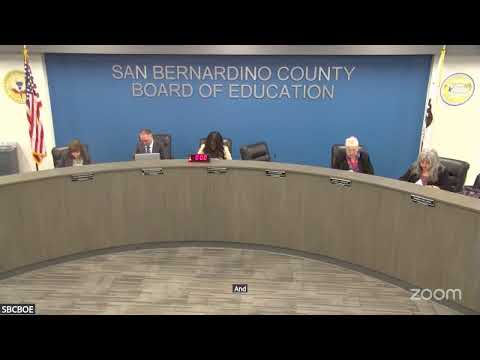
Antoinette, a member of the public, told the San Bernardino County Board of Education on Feb. 9 that the board had received a cease‑and‑desist letter dated Feb. 2 from the American Civil Liberties Union challenging board policy 1.1.4, the county’s public‑comment identification requirement.
"The letter alleges violations of the Brown Act, the First Amendment, and the California Constitution," Antoinette said, reading from the letter. "Requiring members of the public to provide their names and addresses as a condition of providing public comment violates the Brown Act and the Constitution. The Brown Act expressly prohibits requiring people to identify themselves in order to speak, and public participation includes the right to speak anonymously. Forced identification chills speech, especially when the public criticizes government officials or policies." (Public comment, Antoinette.)
Antoinette said the ACLU letter requests a response within 30 days and asked the board why the policy and the letter were not placed on the public agenda for discussion and remedy. "When an unconstitutional policy is not agendized, board members are prevented from discussing it, questioning it, [or] voting to fix it in open session," she said, and urged the board to place the matter on a future agenda with proper notice.
Board members asked procedural questions but did not place the ACLU letter or a policy‑remedy item on that day’s agenda. During the subsequent agenda adoption the board carried the motion to adopt the Feb. 9 agenda; members discussed whether to agendize the matter for a future meeting but took no immediate action to do so.
The claim: Antoinette said the ACLU letter alleges that policy 1.1.4—requiring names and addresses for public comment—violates the Brown Act, the First Amendment and the California Constitution and chills speech. The board did not respond substantively during the meeting; staff and board members noted procedural options for future consideration.
What’s next: Antoinette specifically asked for the issue to be addressed openly with proper agenda notice so the public could see how the board intends to bring policy 1.1.4 into compliance. The board did not act on the letter at this meeting; no formal staff directive or timeline for review was recorded in the meeting minutes.
Ending: The board proceeded with its published agenda and carried the adoption motion. If the board receives the ACLU letter and formally places the matter on a future agenda, that action and any staff analysis will be reflected in subsequent board materials.