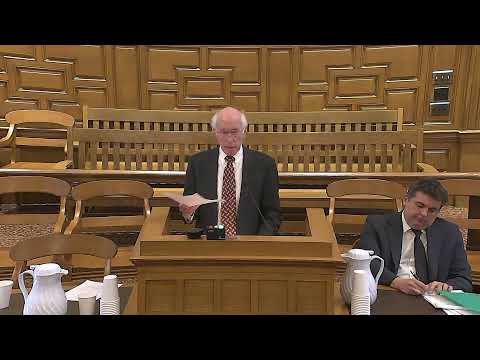
Justices probe whether foster parents may remain in closed care-and-protection proceedings
Loading...
Summary
The appeals court examined whether a foster parent’s statutory right to attend closed child-protection hearings may be limited after sequestration and whether the foster parent’s presence prejudiced the mother; the panel heard competing views on statutory text and trial-court discretion and took the case under advisement.
The panel considered a care-and-protection termination appeal in which counsel for the mother argued the presence of a foster parent in closed juvenile-court proceedings after a sequestration order prejudiced the mother’s visitation and altered the case trajectory. Counsel for the mother asked the appeals court to provide guidance or a standard for when juvenile judges may permit foster parents to remain in the courtroom beyond direct testimony.
Department of Children and Families counsel Matthew Price and child’s counsel Laura Smith (briefing on behalf of the child and CAFL) said the statute (G.L. c.119, §29d) plainly grants foster parents a limited right to attend and be heard and that sequestration motions are the vehicle for addressing concerns about testimonial integrity; they argued the record did not show legal prejudice required to overturn the lower court. The panel discussed comparative approaches in other jurisdictions (Connecticut, Arizona, Colorado) and whether a factors test—focusing on child best interest, witness integrity and privacy—would be useful guidance for trial judges.
The court questioned counsel on whether prejudice must be shown, how trial judges should balance statutory inclusion against privacy and the child’s best interest, and whether the legislature intended broad courtroom access for foster parents. The appeal was taken under advisement.