House committee advances bill to expand land-conservation tax credit and add refundable option
Loading...
Summary
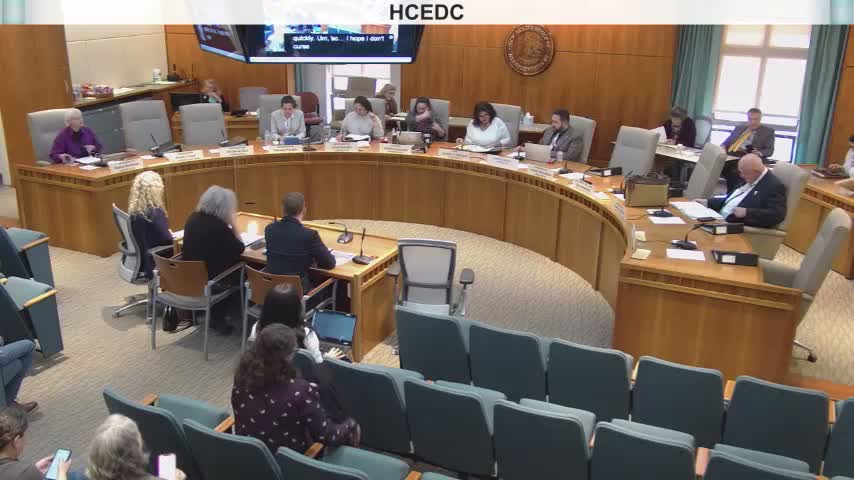
The House Commerce Committee voted 6–3 to give HB186 a do-pass recommendation. Sponsors said the bill raises project caps to $2 million, boosts the credit percentage and makes credits refundable to help 'land-rich, cash-poor' owners; members pressed fiscal and equity concerns.
Representative Susan Herrera opened the hearing on House Bill 186 by saying the measure updates New Mexico’s Land Conservation Incentive Act to encourage private landowners to protect habitat, open space and cultural resources.
"The purpose of this bill is really to encourage private landowners to be stewards of lands that are important to the habitat areas or contain significant natural open space or historic resources," Herrera said. Sponsor testimony said the bill increases the percent of easement value qualifying for credit, raises the project cap from $250,000 to $2,000,000 and adds a refundability option so landowners can receive full value instead of selling credits to brokers.
Jonathan Hayden, executive director of the New Mexico Land Conservancy, described the program as "the steady workhorse of conservation" and said conservation partners have protected roughly 600,000 acres through the program. Hayden said the refundable option is intended to help smaller landowners "bypass that whole brokerage system," noting that brokers typically reduce credit value to landowners.
Supporters from several land trusts and organizations echoed those points. John Thompson, a registered lobbyist for the Rio Grande Agricultural Land Trust, told the committee that the bill helps farmers in the Middle Rio Grande Valley maintain agricultural production and keep water rights in their communities. Garrett Mosley, director of government affairs for the New Mexico Association of Realtors, and representatives of Conservation Voters New Mexico and the Santa Fe Conservation Trust also urged the committee to advance the bill.
Committee members focused questions on two topics: fiscal impact and equity. One member pointed to the fiscal impact review (FIR) prepared by the Taxation and Revenue Department and said the department’s numbers appeared high; proponents said the Legislative Finance Committee (LFC) estimate is closer to expectations. Jonathan Hayden said LFC projected roughly $1.5–5 million annually depending on uptake and that the LFC figure (cited in testimony as about $1.875 million) incorporated the proposed $2 million project cap, which proponents said TRD’s estimate did not. Representative Serrato and others flagged a 201-page FIR passage that, in their view, showed brokers had previously resold credits to wealthy buyers and asked whether refundability would worsen that dynamic. Hayden and sponsor Herrera responded that refundability is intended to help smaller and lower-income landowners capture more of the value.
Supporters argued the change would leverage federal programs (for example, agricultural land easements, Forest Legacy and the Land and Water Conservation Fund) and create rural economic benefits by preserving working lands. Opponents were not recorded at the hearing.
After discussion, the committee voted 6–3 to give HB186 a do-pass recommendation to the next legislative stage.
Action taken: Committee moved a do-pass recommendation (final tally: 6 yes, 3 no).