
HHS and USDA unveil 'Make America Healthy Again' guidelines and campaign, tout SNAP waivers and school-meal rule
Get AI-powered insights, summaries, and transcripts
Subscribe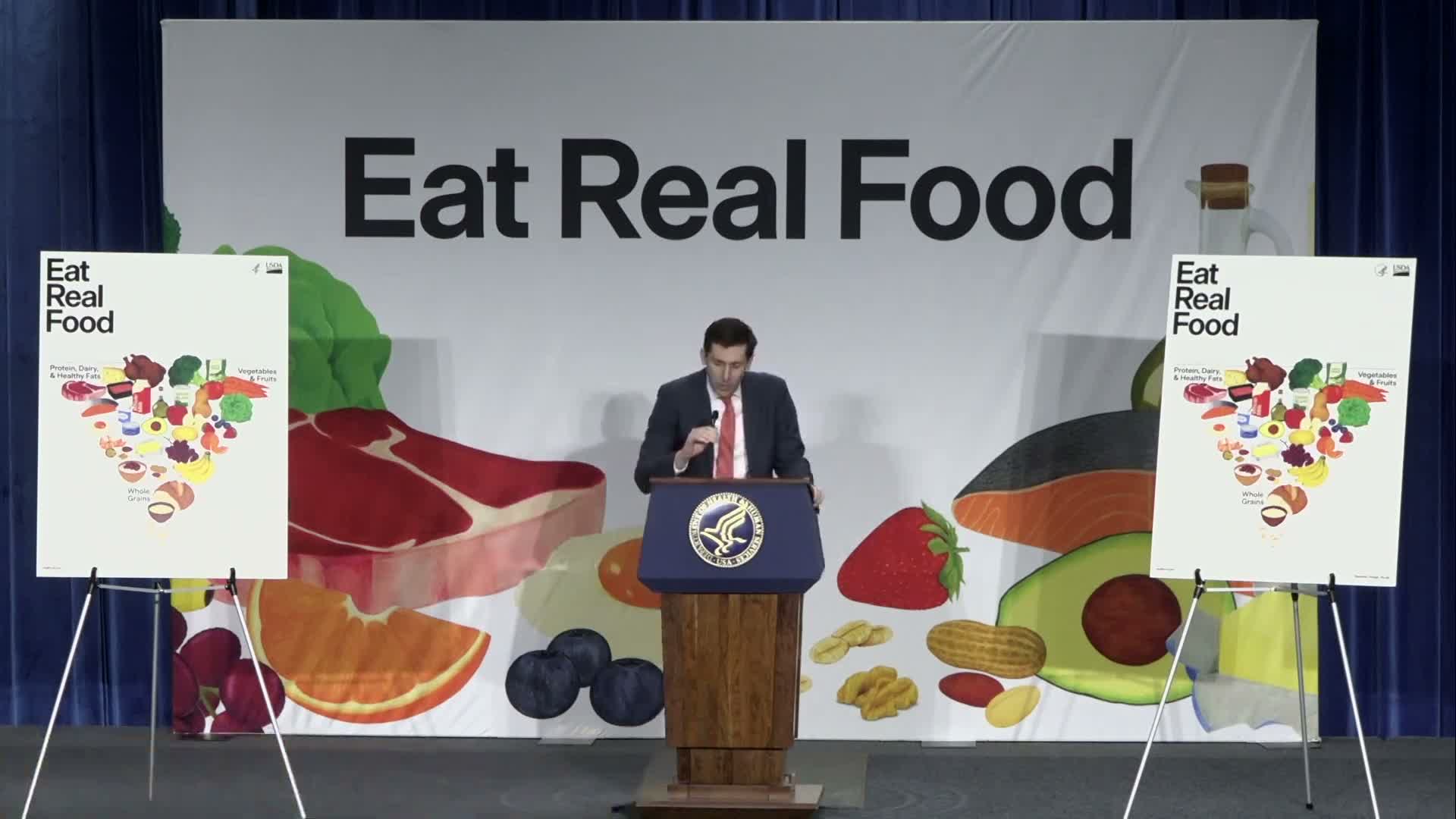
Summary
At a federal event, HHS and USDA leaders rolled out the 2025–2030 Dietary Guidelines for Americans and the 'Make America Healthy Again' campaign, announced SNAP waivers in roughly 18 states, guidance to child-nutrition directors and plans for a proposed school-meals rule; the launch included a national ad starring Mike Tyson.
At an event hosted by the U.S. Department of Health and Human Services and the U.S. Department of Agriculture, federal officials unveiled the 2025–2030 Dietary Guidelines for Americans and a nationwide public campaign called "Make America Healthy Again," aiming to shift procurement and program standards toward whole, nutrient-dense foods. HHS Secretary Robert F. Kennedy Jr. and USDA Secretary Brooke Rollins led the presentation and described steps the administration said would move federal feeding programs away from ultra‑processed foods.
The administration framed the effort as both a public-health and procurement shift. "Eat real food," HHS Secretary Bobby Kennedy said, summarizing the guidance and the campaign's message. Kennedy and other speakers described the guidelines as grounded in what they called "gold standard science" and said the administration will use federal purchasing power to favor local, unprocessed foods in schools, the military and other programs.
Brooke Rollins, USDA secretary, told attendees that 18 states had received SNAP waivers allowing restrictions on purchases of soda and certain junk foods and said the department has released guidance for regional and state child-nutrition directors to begin incorporating the new Dietary Guidelines into program meals and snacks. Rollins also said USDA expects to publish a proposed school-meals rule by mid‑spring to reflect the guidelines and to update stocking standards for program retail outlets.
Speakers described pilots and operational changes at federal institutions. Army Undersecretary Mike O'Bodell said the Army is moving to a campus-style, concessions-based dining model, with a Fort Hood pilot opening in about one week, and has introduced "Power Bowls" and other whole-food options. William Marshall, director of the Federal Bureau of Prisons, said the bureau will work with HHS staff to review food-service manuals and explore low- or no-cost menu improvements, citing international studies that link improved nutrition to reductions in disciplinary infractions.
The rollout included industry and medical endorsements. Bobby Mukamala, identified in the program as president of the American Medical Association, said nutrition should be treated as a cornerstone of prevention and pledged AMA support for physician guidance, labeling efforts and nutrition research. The event also highlighted private-sector commitments: organizers noted that Tyson Foods had pledged to remove petroleum‑based dyes and reduce high‑fructose corn syrup in some products, and said FDA plans to establish a definition of "ultra‑processed foods" to guide labeling and federal purchasing decisions.
Organizers unveiled a consumer-facing element, including a redesigned food pyramid and realfood.gov, described by a National Design Studio representative as an effort to make federal guidance accessible and appealing. The campaign also features a widely aired Super Bowl advertisement starring boxing champion Mike Tyson; Tyson, who spoke at the event, said his involvement stems from a personal history with obesity in his family and community and described the campaign as "the biggest fight of my life."
Officials offered figures and context during remarks. The Bureau of Prisons was described as caring for more than 152,000 federal inmates; speakers said USDA manages multiple nutrition programs and characterized the department's nutrition spending as a significant market influence. The administration characterized the nation's diet-related disease burden as large — remarks included statements such as "6 in 10 American adults now live with at least one chronic disease" and estimates about the share of health-care spending tied to chronic conditions; those numbers were presented by speakers as part of their case for reform.
Next steps outlined at the event included implementation actions inside federal feeding programs, rulemaking for school meals and ongoing partnerships with state agencies and private suppliers. Officials said they will pursue procurement reforms, expand education and labeling, and invite state and industry partners to adopt related measures. The administration said the campaign and policy work will be rolled out over months and years and emphasized bipartisan cooperation as a goal.
The event closed with calls to action and promotional material for the campaign; organizers asked program directors and state partners to review the guidance and consider incorporation into their meals and procurement practices.