Get Full Government Meeting Transcripts, Videos, & Alerts Forever!
Get email alerts on the Budget And Instruction topic
No spam. Unsubscribe anytime.
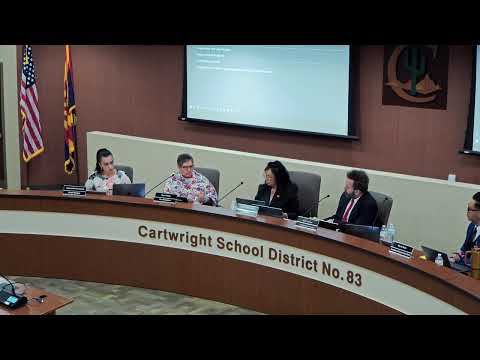
Teachers and residents press Cartwright board over budget, five-day schedule
Summary
At the Feb. 4 Cartwright Elementary School District board meeting, taxpayers and teachers questioned the district’s finances and the return to a five-day week, citing conflicting data and asking how the district will cover reported costs; the board heard public comment but did not change policy.
Cecilia Moreno, who identified herself as a taxpayer and district resident, opened public comment at the Cartwright Elementary School District governing board meeting on Feb. 4 with urgent questions about district finances and leadership, saying, “Now you want to spend $6,000,000 on expanding to a 5 day week.”
Gabriel Cantu, a fifth‑grade teacher at Sunset who said he has taught there for 25 years, questioned whether the reported cost was justified for the extra classroom time it would buy. “Is the $56,000,000, is it worth, you know, two hours of classroom time a week?” he asked, and urged the board to prioritize investments in tiered instruction and staff support instead of schedule changes.
Longtime teacher Laura Kleinite, who said she has taught in the district for 33 years, told the board she was confused by what she called conflicting messaging. She noted a district campaign highlighting successful graduates but said the data presented at a prior board meeting characterized student achievement as low. “How does this fit with our students being illiterate with no aspirations?” she asked, and urged clearer data and community engagement before major changes.
Board members did not take substantive action on the schedule during the meeting. President and board members said they heard the concerns and emphasized the need for further data and community outreach; several board members asked for additional analysis and public engagement steps ahead of any final decisions.
Why it matters: The comments reflect teacher and community skepticism about the district’s direction on instructional time and spending as officials prepare a compressed calendar and budget decisions for the coming year. Several speakers said they feared negative downstream effects — including enrollment loss and pressure from charter interests — if the district’s messaging and choices are not better explained.
What’s next: The board did not vote on the five-day schedule at the Feb. 4 meeting. Board members requested additional information and emphasized outreach; the president set the next regular meeting for Feb. 18, 2026, where budget and calendar items may reappear.