
District launches instructional coherence initiative to align systems and classroom practice
Get AI-powered insights, summaries, and transcripts
Subscribe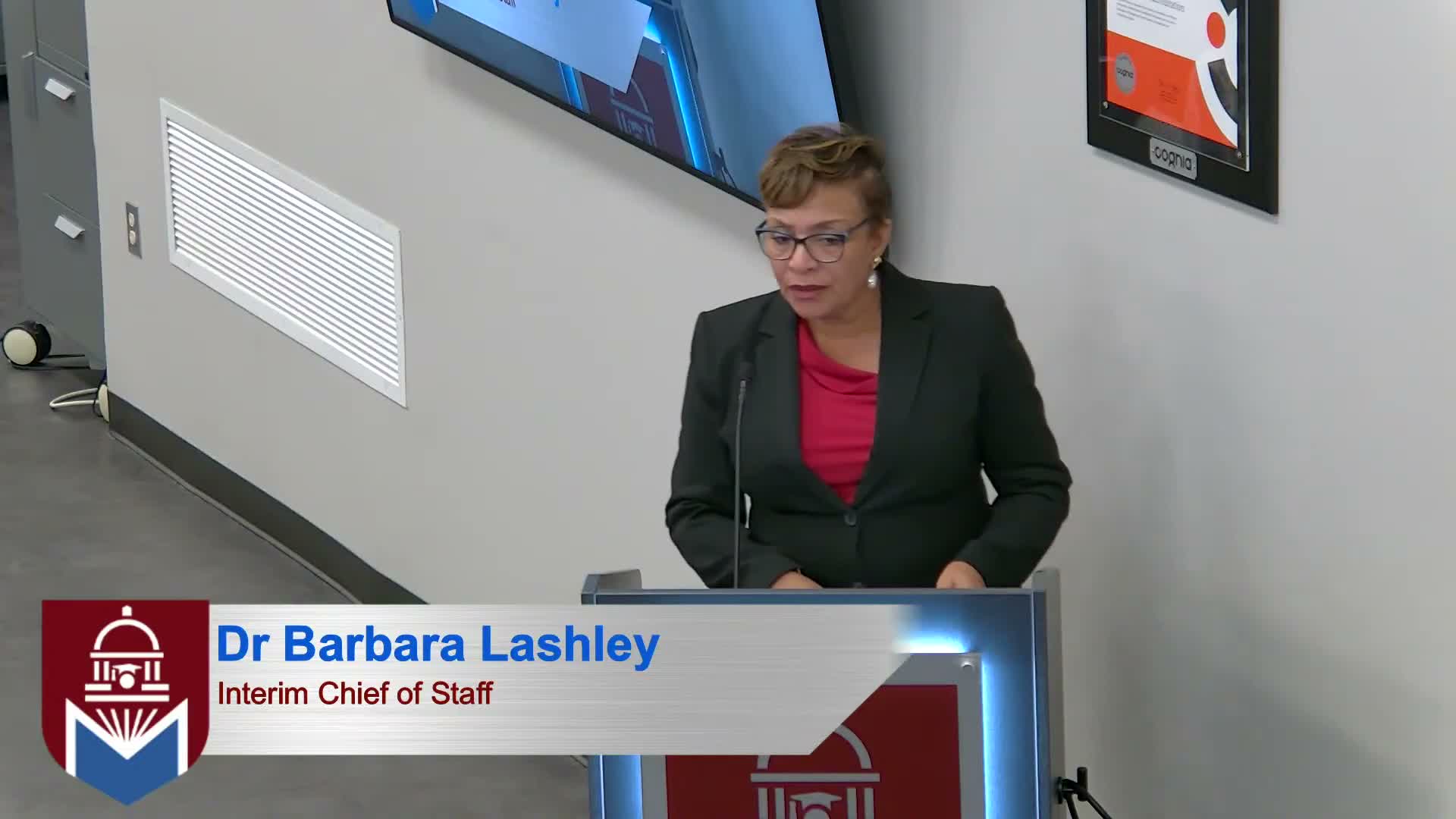
Summary
Chief academic leaders presented a multi‑phase coherence initiative aimed at aligning district systems and classroom practices, including a leadership institute, school walkthroughs and targeted diagnostics in 15 priority schools to strengthen vision, resources and coaching.
District academic leadership presented an initiative to improve instructional coherence across Montgomery Public Schools, emphasizing alignment between district systems, school leadership and classroom practice.
Doctor Lashley described a three‑phase approach launched in January: (1) a leadership retreat and coherent institute for cabinet and district leaders, (2) job‑embedded walkthroughs and school visits (including Floyd Magnet), and (3) an instructional and systems coherence diagnostic targeted at 15 CSI/TSI schools with immediate feedback and collaborative site reports. She said participants identified silos and rated "vision for excellent instruction" as a low‑scoring area that needs focused work.
Lashley summarized survey results from participants: 79% reported they could distinguish systems vs. instructional coherence after sessions and 85% agreed they understood where classroom decisions must be made and the support required. Short‑term priorities and a schedule from January through June were shared to operationalize the work.
Trustees asked whether classified staff and non‑instructional departments were included; Lashley said maintenance, security, food and transportation leaders participated and that the plan intends to cascade expectations from the top down. The board offered support and asked for follow‑up reports to show how classroom practice changes as a result of the diagnostic work.