Get Full Government Meeting Transcripts, Videos, & Alerts Forever!
Get email alerts on the Opioid Treatment Access topic
No spam. Unsubscribe anytime.
Committee advances substitute to require better pharmacy access to buprenorphine; pharmacies raise supply and reimbursement concerns
Summary
The committee adopted a substitute to HB137 designed to require baseline stocking of buprenorphine at pharmacies, improved distributor transparency and system-level enforcement while exempting small community pharmacies from burdensome administrative requirements; the committee voted 5–3 to 'do pass' the substitute and 'do not pass' the original bill after extensive pro‑ and con testimony.
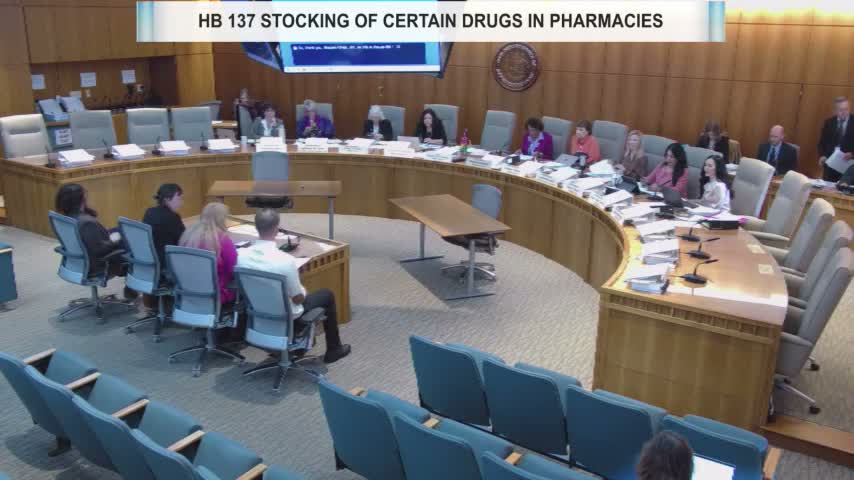
After extended testimony and negotiation, the House Health and Human Services Committee adopted a substitute to HB137 that aims to reduce pharmacy‑level barriers to buprenorphine, a medication for opioid use disorder, and recommended the substitute for passage.
Proponents — including addiction medicine physicians and public‑health researchers — told the committee that interrupted access to buprenorphine causes preventable relapses and overdoses; one clinician said a patient was unable to fill a prescription over the holidays and relapsed on fentanyl while waiting for medication to return to stock.
The substitute establishes data‑driven minimum stocking standards, requires distributors to report denials or delays of pharmacy buprenorphine orders monthly to the state, and directs the Department of Health to publish biannual pharmacy‑level access information. The substitute is explicitly designed to protect independent, community‑based pharmacies by streamlining stocking requirements for them and avoiding new fines for pharmacies while providing corrective-action planning; fines are targeted at noncompliant distributors.
Pharmacy trade groups and distribution associations opposed the mandate in testimony, arguing the bill misidentifies supply-chain drivers and imposes administrative and financial burdens, particularly for rural independents; they urged solutions focused on reimbursement, prescribing patterns and logistics rather than inventory mandates. Medicaid officials said they were neutral pending review of the substitute and funding implications.
After debate the committee adopted the substitute and recorded a committee tally of 5–3: a do‑not‑pass on the original version and a do‑pass on the committee substitute. Sponsors and proponents said the substitute reflects extensive negotiation intended to balance access and pharmacy concerns; opponents asked for continued stakeholder work during final drafting.