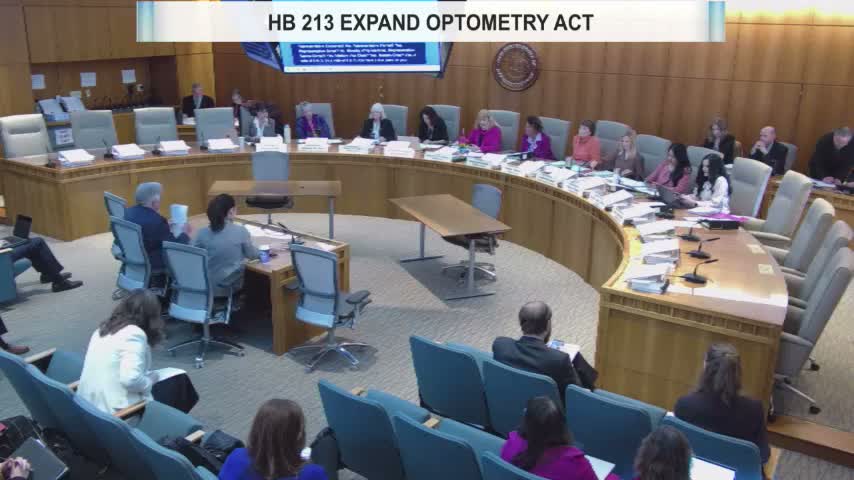
Committee advances Foster Care Plus pilot with reporting, funding in HB2; members press for accountability
Loading...
Summary
The committee adopted a substitute for HB65 to codify a CYFD Foster Care Plus pilot, rename it, require clinical-assessment-based placement and reporting to the Legislature, and advance a funding request already included in HB2; committee approved the substitute 8–1 amid questions about sufficiency of funds and implementation capacity.
Lawmakers advanced a committee substitute to House Bill 65 that codifies the Foster Care Plus pilot program, clarifies clinical-assessment eligibility, adds legislative reporting and performance measures, and aligns statutory language with the model that CYFD is piloting with outside technical support.
The sponsor said the substitute ‘‘renamed this bill to be foster care plus pilot program’’ and removed a CANS assessment reference in favor of ‘‘clinical assessment’’ by a licensed practitioner; the substitute also directs the department, in collaboration with the Health Care Authority, to contract with clinical experts and to report ongoing implementation outcomes to the Legislature.
Acting Cabinet Secretary Valerie Stone told the committee that $2.5 million in HB2 and a $1.25 million growth fund carryover are available to support the pilot; she said 28 children currently participate and that contracts with out‑of‑state experts (HSG from Oklahoma) are already in place to help implementation and fidelity to the model.
Members raised persistent worries about county capacity, the program’s prior implementation challenges and whether the funding is sufficient for broader scale-up; the department described workforce recruitment, anticipated five additional staff and a plan to accelerate service delivery if additional funds are released.
The committee adopted the substitute and recorded an 8–1 vote in favor. Sponsors stressed they will ‘‘watch’’ implementation and asked the department to provide the performance and outcome reporting required by the substitute as the pilot expands.
What’s next: The committee substitute will be reported to the next House committee with appropriations and implementation details to follow in budget review.