
Committee backs optometry certification amendment for three laser procedures, medical board objects
Get AI-powered insights, summaries, and transcripts
Subscribe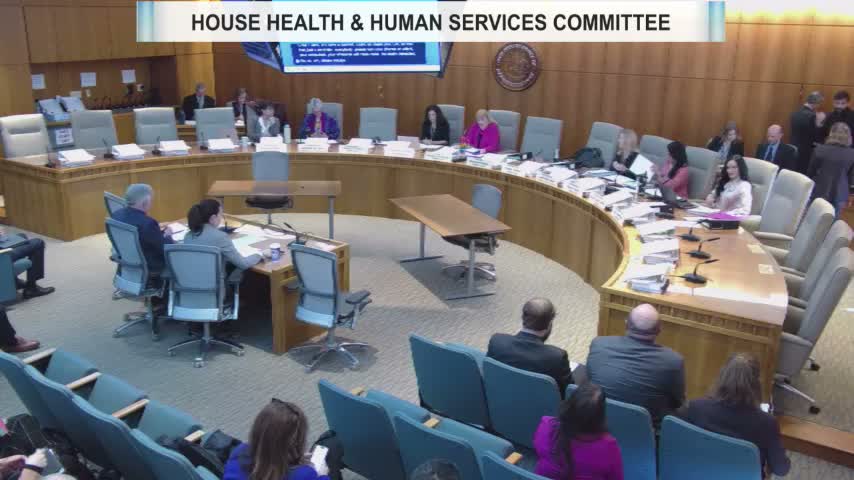
Summary
The House Health and Human Services Committee approved a committee substitute for HB213 to allow optometrists to perform three specified laser procedures after a 32-hour advanced course, supervised live-patient training, and mandatory adverse-event reporting; the New Mexico Medical Board testified in opposition citing patient-safety and oversight concerns.
The House Health and Human Services Committee on Wednesday approved a committee substitute to House Bill 213 that would let optometrists perform three specified laser procedures after completing an advanced education and certification pathway and supervised clinical training.
Sponsor remarks and the substitute spell out an education requirement ‘‘which is completion of a 32 advanced procedure course approved by the New Mexico Board of Optometry or graduation from optometry school in 2026 or later with passage of a standardized national exam,’’ plus supervised training on live patients and mandatory adverse-event reporting to the Board of Optometry.
The bill also directs the board to hold public rulemaking with stakeholder input before implementation and requires tracking of outcomes. The sponsor told the committee that an additional accountability amendment negotiated with the New Mexico Medical Society will be offered in a later committee.
Medical board chair Dr. Karen Carson opposed the change at the hearing, saying the board was not consulted and that shifting surgeries ‘‘to optometrists who receive significantly less training than ophthalmologists will pose serious safety risks’’ and that the bill moves certain surgical oversight outside the Medical Practice Act.
Republican and Democratic committee members pressed the bill’s witnesses on specifics: whether the 32-hour course includes supervised practice (witnesses said supervision occurs during the course and additional supervised procedures on live eyes follow), how many supervised procedures would be required (no fixed number was specified), and whether optometrists have malpractice coverage for surgical procedures (witnesses said malpractice coverage is available through association plans).
The committee recorded a 6-to-3 vote in favor of the committee substitute, advancing the amended approach while leaving open further changes before floor consideration.
What’s next: The committee substitute will be reported out of committee and move to subsequent House consideration and any additional amendment cycles noted by the sponsor.