Georgia House approves tighter rules, higher speed cap for delivery robots
Loading...
Summary
The House passed House Bill 986 to update rules for personal delivery devices, setting a 7 mph cap and requiring continuous auditory signals for visually impaired pedestrians; sponsors said the changes reflect industry and state input. Vote: yeas 164, nays 3.
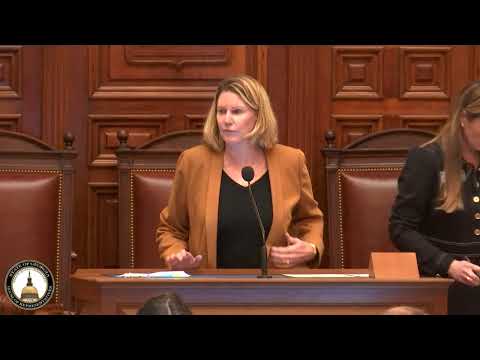
Representative Todd Jones presented House Bill 986 to revise Georgia’s rules for personal delivery devices, saying the state had been “a leader” on the technology and the bill balances safety with efficiency. “These are robots,” Jones told colleagues, describing PDDs as “coolers with 4 wheels” used in parts of Atlanta.
The bill raises the allowable speed in certain contexts and sets a 7 mph cap where crosswalk movements are concerned, a change Jones described as a conservative step compared with other states: “we're just gonna trim it up to 7.” Sponsors said the measure was negotiated with the industry, the Georgia Department of Transportation and local governments.
Representative Jasmine Clark asked whether the increased speed could make collisions more dangerous, particularly for people with visual impairments. Jones responded that the bill adds a continuous sound requirement so PDDs will emit audible signals for the visually impaired rather than sound only on approach, and that the measure was discussed during the off season with stakeholders.
After brief questioning from other members, the House agreed to the committee report and voted to pass the bill. The clerk announced the result: yeas 164, nays 3. The bill will move to the next steps required before becoming law.
Members on both sides framed the change as a safety-and-efficiency compromise intended to allow wider, regulated use of PDDs in urban areas while adding safeguards for pedestrians.