Senate approves sweeping housing‑growth package after marathon floor debate; opponents cite erosion of local control
Loading...
Summary
In a lengthy special‑session debate the Connecticut Senate passed HB 8002, a 100+ page housing package creating municipal housing‑growth plans, regional goals, new grant incentives and procedural changes for small residential conversions. Supporters call it an urgent tool to increase housing supply; opponents say it centralizes power, weakens home rule and was rushed without public hearings.
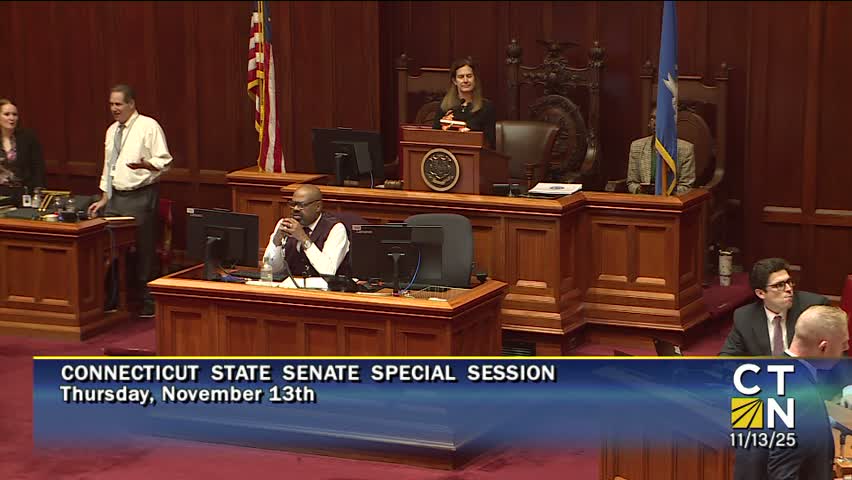
The Connecticut Senate approved House Bill 8002 in the Nov. 13 special session after many hours of floor debate and repeated amendment votes. The package reworks parts of the state’s housing policy to encourage municipalities to produce “housing growth plans,” establishes regional housing needs assessments, and creates new grant and incentive pathways for towns that adopt qualifying zoning changes or transit‑oriented development standards.
Sponsors argued the measure is a multi‑tool response to statewide shortages and affordability pressures. Senator Duff, who led the bill on the floor, described its mix of incentives, housing‑growth targets and infrastructure grants as an effort to “build more housing” in the months ahead. “This is about building housing and alleviating the affordable‑housing crisis,” he said.
Opponents called the bill an overreach that weakens local planning authority and imposes de facto mandates through funding incentives. Senator Sampson, a frequent critic, said the package effectively replaces time‑honored local decision making with regional and state control and warned the measure was rushed into law without appropriate public hearings or time for scrutiny. “This is a slap in the face of local communities,” he said.
Floor amendments, many offered by Senator Gordon, sought to broaden the definition of housing affordability, add specific credits for disabled veterans, fix timing and appeal procedures, and correct drafting errors (including a parking threshold inconsistency noted on the floor). Most of those amendments failed on roll calls. Supporters highlighted planned safeguards: municipal plans must meet public‑health and safety standards, and the bill includes reporting, technical assistance and optional regional collaborations for small towns.
The Senate passed the bill after the final roll call; the measure will be transmitted to the governor. Local officials and municipal groups are already preparing to examine changes to planning rules, and the Department of Housing and OPM will publish guidance if the bill is enacted.
What to watch next: municipal housing‑growth plans, OPM/COG implementation guidance, and whether any affected towns pursue legal challenges or request clarifications from the legislature.