
DeKalb officials update comprehensive housing plan and propose $155 million housing investment bond
Get AI-powered insights, summaries, and transcripts
Subscribe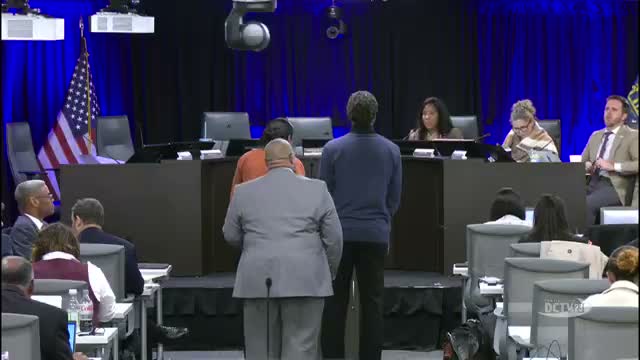
Summary
At a PECS committee meeting, county staff and consultants outlined a two‑phase comprehensive housing plan and Dr. Ferguson proposed a $155 million Housing Investment Bond intended to create or preserve over 10,000 units and leverage roughly $1 billion in additional investment.
At a DeKalb County Planning, Economic Development and Community Services (PECS) committee meeting, Chief Housing Officer Dr. Ferguson and a consulting team from Enterprise Community Partners and Sycamore Consulting updated commissioners on the county’s first comprehensive housing plan and introduced a proposed Housing Investment Bond.
Divya Palmer of Enterprise and Madison Davis of Silicon Work Consulting described a two‑phase process that began with discovery—data analysis, inventorying existing programs and resident engagement—and will move into planning with tactical strategies and a five‑year action plan. Madison said the team plans five community forums (one in each commission district), follow‑up focus groups, additional working‑group meetings and a public synthesis at the end of the summer before returning to the Board in October for plan adoption.
Dr. Ferguson said the county intends to use bond proceeds to accelerate the new Affordable Housing Fund. "We anticipate [the bond proceeds] will be $155,000,000 when it's all said and done," he said, and added the county expects the investment to "create and preserve over 10,000 units" and to leverage more than $1,000,000,000 in private and public investment. Ferguson framed the bond as a way to inject upfront capital while the existing fund provides recurring annual support.
To support bond debt service and to provide predictable funding, Ferguson described a proposed annual allocation of roughly $15 million from the general fund. He said estimated annual bond debt service would be about $10 million, leaving approximately $5 million per year available for programmatic uses tied to the bond. Ferguson also said staff plan to develop program parameters and eligibility guidelines and bring those proposals back to the PECS committee after additional stakeholder work sessions.
Commissioners asked for comparative models and operational details; Michelle Long Spears asked whether the program framework was modeled on Atlanta’s housing fund and requested that staff provide the stakeholder list and resource map. Madison confirmed the team will share previously prepared resource research and will email commissioners the stakeholder outreach groups. The consultants stressed that priorities remain subject to public input.
Next steps: staff will continue public engagement (district forums and focus groups), complete the planning phase, produce proposed guidelines for the Affordable Housing Fund’s use of bond proceeds, and return to PECS for additional review before any bond issuance is advanced through the county’s budget process.