Residents press county to nail down protections as Blackfoot Crossing plan advances
Loading...
Summary
Dozens of residents at a Bonner Milltown Community Council meeting urged Missoula County commissioners to require binding protections before allowing rezoning that could enable a travel plaza and up to 400 housing units; commissioners will consider the matter March 5.
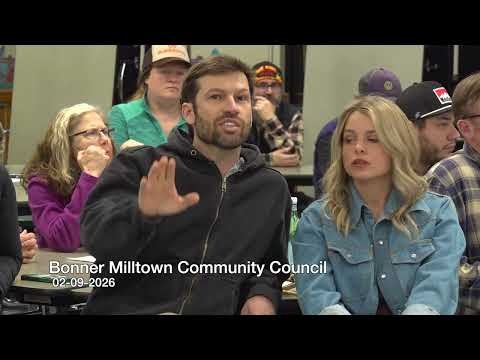
At a Bonner Milltown Community Council meeting, residents and council members pressed for enforceable limits on a proposed development known as Blackfoot Crossing, saying the project could worsen traffic, strain water and septic systems, and change neighborhood character.
"I've not met one person in that neighborhood that is for it," said Mark Metzger, a West Riverside resident, describing door-to-door opposition and dust problems he attributed to early site operations. Several other residents raised similar concerns about traffic and water, and asked for clearer, verifiable commitments from the developer on what was being called "attainable" housing.
The question matters because the Board of County Commissioners will consider a recommendation on rezoning at a public meeting on Thursday, March 5, at 2 p.m. in the Sophie Louise Room at the Missoula County Courthouse (with a virtual option). Rick Hall, a member of the newly formed Missoula County Consolidated Land Use Board, told the meeting that "nothing is final at this point" and that the planning process will include additional public review before any plats or final approvals.
Why it matters: Residents said the scale of the proposal and the developer's promises are too vague. One longtime resident said the project would include "400 attainable housing units," sewer hookups for some West Riverside properties, and public-access walkways to the river and mountain; community members questioned whether those housing units would actually be affordable to local families and asked for concrete definitions and enforceable commitments.
The council and commenters discussed several potential legal mechanisms and limits: deed restrictions tied to the land, zoning at lower allowable densities, and development agreements. Rick Hall explained limits of each approach, noting that deed restrictions may not bind future buyers unless the restriction is structured to run with the land, and that only a development agreement or a zoning change recorded at the county level would create enforceable obligations.
Community members also flagged environmental and quality-of-life issues. "We're about to stand on the aquifer," one speaker said, warning of lower pressure and more wells being drilled. Others described worries about odor, lighting, and public safety if a high-traffic travel plaza were sited next to residential areas.
What happens next: The council urged neighbors to attend the March 5 commissioners' hearing and to submit comments through Missoula County's portal and commission email addresses. Council members reiterated that the planning board's role is advisory and that the final decision rests with the Board of County Commissioners.
The meeting did not result in any formal county action; it produced public testimony and a call for clearer, enforceable commitments before rezoning and plat approvals proceed.