Public commenters and elected officials question county housing‑allocation method tied to Commerce model
Loading...
Summary
Public commenters, builders and elected officials on Feb. 11 pressed county staff over large allocation shifts produced by the HAP/HAPT tool and said Commerce’s proprietary formulas were not available for review; staff said using Commerce guidance is necessary for Growth Management Act compliance.
Public commenters, home‑building representatives and multiple elected officials raised strong concerns at the Feb. 11 Steering Committee meeting about recent changes to housing allocations produced by the county’s HAP/HAPT tool and the Commerce guidance that underpins it.
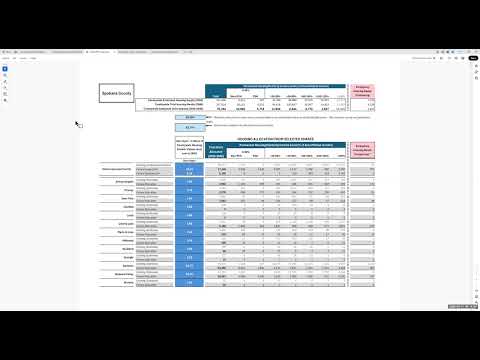
Jim Frank, a public commenter, described large, jurisdictional shifts in the allocation table and said the changes are "very, very significant." He cited specific changes including Airway Heights from 5,007 to 3,955 units (a roughly 27% decrease) and said the county UGA allocation decreased about 34% while rural Spokane County allocations rose about 75% (from 3,534 to about 6,195), and argued these moves ran contrary to prior steering‑committee policy and raised public‑service and wildfire‑risk concerns.
Builders’ representatives including Darren Watkins and Isaiah Payne urged the committee to slow or scrutinize changes and to hold public hearings before altering allocations, warning that sudden changes could harm housing production and local economic competitiveness.
County planning staff (Scott) explained that Commerce directed local agencies to use housing‑unit (dwelling‑unit) allocations rather than population allocations and that staff used a persons‑per‑household matrix to convert Commerce outputs into local allocations. Scott said the consulting team told staff the model included proprietary elements and “we were not allowed to see the formulas” that generate the allocations, which has frustrated local planners and elected officials.
Elected officials including Commissioner French and multiple city council members said they share the frustration. Scott said the county must use Commerce guidance to remain compliant with the Growth Management Act but proposed a reconciliation process modeled on other counties to adjust allocations after plans are adopted.
Why it matters: Allocation tables guide how jurisdictions plan for land, infrastructure and services. Committee members warned that large, unexplained shifts could change where growth is expected and raise questions about infrastructure, wildfire exposure and travel times.
What’s next: Staff said transportation modeling and the county DEIS/comp plan timelines remain on a March–April schedule for initial findings and public engagement; staff will post maps and continue outreach and has proposed a reconciliation policy to be developed through PTAC and the steering committee.