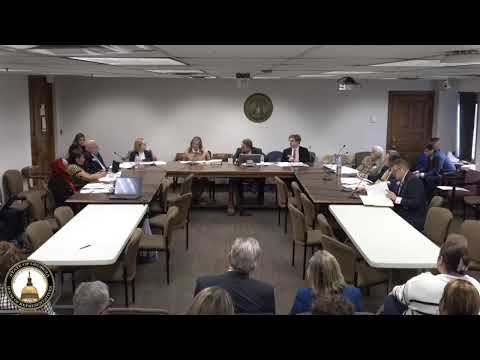
Committee advances Mandy Ballenger Act to study raising the juvenile age; stakeholders voice support and concerns
Loading...
Summary
The committee voted to pass HB 1061 (the Mandy Ballenger Act), creating an organizational committee to study implementation of raising the juvenile age; law‑enforcement groups warned of risks, while prosecutors, juvenile justice and child‑advocacy organizations urged careful, well‑funded planning.
The House Judiciary Juvenile Committee voted to advance House Bill 1061, known in the hearing as the Mandy Ballenger Act, which creates an organizational committee to plan how Georgia would implement a phased ‘raise the age’ policy. The substitute (LC6300088S) sets committee membership and directs a report on costs and implementation to the governor and legislative leaders.
Chair Camp said the bill is the first implementation step following 2024 legislation and described the committee as the body that would determine operational questions — housing, staffing, placement options and when and how to move cases between juvenile and superior courts. “This bill is just the first part of the bill we passed in 2024,” the chair said, framing the measure as the organizational step toward eventual statutory changes.
Law‑enforcement testimony came from Mike Mitchell, deputy director of the Georgia Sheriffs’ Association, who said the association’s position on the substitute is neutral but reiterated that many sheriffs oppose raising the age and urged caution. “Many states have done this. Two in particular have actually repealed raise-the-age within the past couple of years,” he said, and he warned the committee to proceed cautiously.
Prosecutors’ voices were generally supportive of the study approach: Peter John Skandalakis, executive director of the Prosecuting Attorneys’ Council of Georgia, said a majority of district attorneys favor an organizational committee to address practical implementation issues. Agencies and child-advocacy groups — including the Georgia Department of Juvenile Justice, the Barton Child Law and Policy Center, the Southern Poverty Law Center and Voices for Georgia’s Children — urged careful planning around capacity, staffing, placement and behavioral‑health needs.
Committee members debated timeline details and adopted a friendly amendment to change commencement and repeal/abolition dates: the committee shall commence no later than Sept. 15, 2026, and shall stand abolished on Dec. 31, 2027; the bill’s reporting deadline was adjusted to Dec. 1, 2027. Members discussed federal PREA requirements and whether counties are uniformly separating 17‑ and 18‑year‑old detainees; witnesses offered to provide compliance numbers after the hearing.
A motion to pass HB 1061 as amended carried by voice vote in committee; one member announced an abstention during tally. The organizational committee created by the measure will prepare cost estimates and recommendations that would guide any later bills to change statutory ages or implement facilities and services.