
Committee advances Albany County resolution on advanced nuclear technology after amendment
Get AI-powered insights, summaries, and transcripts
Subscribe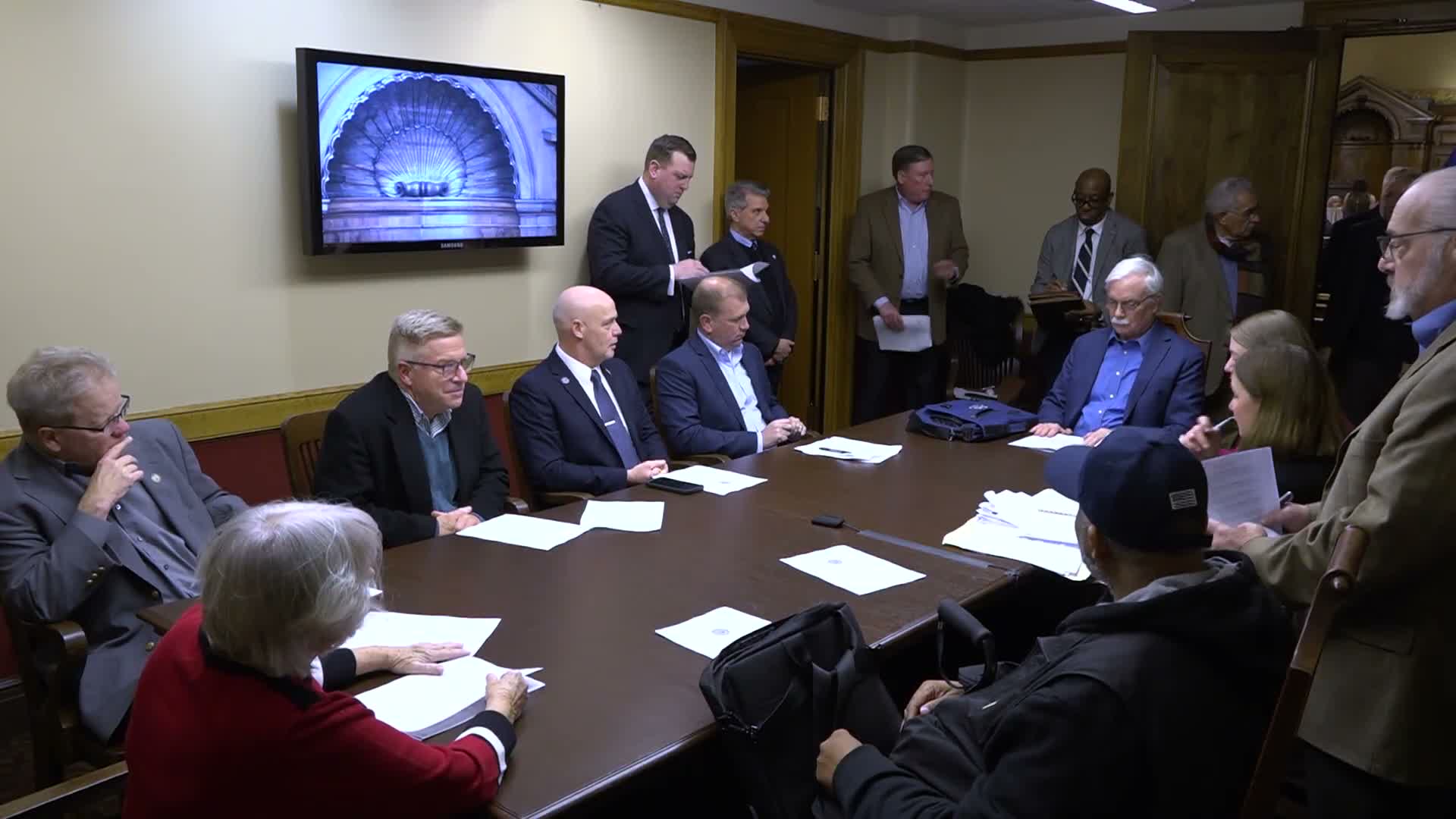
Summary
A county committee voted to advance a resolution on advanced nuclear technology after agreeing to remove a proposed legislative finding (section (d)). Members debated waste disposal, regulatory jurisdiction, geothermal alternatives and cost before moving the bill forward as amended.
A county committee advanced a resolution on advanced nuclear technology after members voted to move the measure out of committee with an anticipated amendment that removes a proposed legislative finding identified in the transcript as section (d).
Speaker 1 opened the meeting by saying the committee would consider one change: "that change is to eliminate, that section d in that first section 1 30 35 dash 2, and then everything else stays the same." Speaker 2 then moved to "pull the amendment," and Speaker 1 seconded the motion.
Opponents and supporters framed the debate around trade-offs between nuclear and other energy options. Speaker 4 said, "I probably agree with everything that Keith Hsu had. But based on my actual experience with the governor, I don't believe anything we do or don't do is gonna affect whether we have nuclear energy," and argued the county should prioritize alternatives such as geothermal, noting work "since 2017 to get our capital and several other buildings off geothermal energy." Speaker 4 added that the county could do more to move away from fracked gas sooner than the bill's timeline.
Speaker 3 raised concerns about radioactive waste and regulatory oversight: "there's no place right now in The United States to dispose of any, nuclear high level nuclear waste that's generated at these facilities... it's being stored on-site," and noted some facilities are regulated by the Department of Energy rather than the Nuclear Regulatory Commission, citing examples such as Fort Drum.
Speaker 1, who said they had prior experience with a nuclear utility and alternative energy work, questioned the cost trajectory for small modular reactors (SMRs). "I don't believe it will be cheap... the cost curve for them has gone up while the renewable curves have been going down," Speaker 1 said, adding that renewables and batteries are now, in their view, often cheaper than advanced nuclear technology.
On procedure, Speaker 1 described the committee's plan: "what we're gonna agree on or what we're gonna vote on now as a committee is to move it forward as amended." The motion to advance the measure with the removal of subsection (d) passed in committee; the transcript records Speaker 1 and Speaker 2 voting in favor and Speaker 4 opposing when asked to state a vote. The transcript does not record a full roll-call tally for every member.
What happens next: the committee moved the item out of committee "with anticipation of amendment," meaning the substantive amendment (removal of subsection (d)) is expected to be applied when the measure is considered on the floor.
The meeting then concluded with a motion to adjourn.