Get Full Government Meeting Transcripts, Videos, & Alerts Forever!
Get email alerts on the Police Identification topic
No spam. Unsubscribe anytime.
Eugene police present public guide to vehicle and uniform identification
Summary
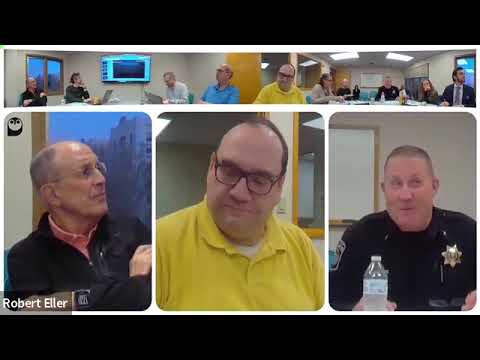
Deputy Chief Jake Burke of the Eugene Police Department led a training for the Citizens Review Board on how to distinguish EPD vehicles, uniforms and alternative-response teams from federal agents, and urged calm, safety-first approaches when members of the public encounter officers.
Deputy Chief Jake Burke of the Eugene Police Department told the Citizens Review Board that the city has posted public-facing materials meant to help residents identify EPD officers, vehicles and uniforms and reduce misidentification with federal agents.
"My name is Jake Burke. I'm the deputy chief of police at Eugene Police Department," Burke said as he began a slide-based overview of patrol vehicles, community service trucks, bailiff vans and tactical units. He emphasized that some vehicles are unmarked or rotate between administrative and patrol duty and that officers are trained to carry identification and to identify themselves when asked.
Board members pressed Burke on tactical uniforms and face coverings. Burke said there may be limited circumstances—surveillance, undercover work, certain tactical responses or health concerns—where faces are covered, but he added those are not routine practices. He also described community service officers (CSOs) as non-sworn personnel who wear clearly labeled gear and are intended to handle lower-risk calls.
Burke recommended that community members who see an interaction they find concerning either approach calmly and respectfully or call the nonemergency police line to verify what is happening. He said the city’s website and recent social-media posts include images of uniform patches, badges and typical vehicles so residents can cross-check what they observe.
Several board members said the public-facing materials are helpful but urged broader outreach—neighborhood association visits, in-person forums and ride-alongs—to reach residents who may not use social media. "We can get out and discuss how all those things go," the Independent Police Auditor said, noting the office’s transparency work and willingness to present to community groups.
The training concluded with board members agreeing that clear, repeated community education could reduce tense or unsafe encounters and lower the number of mistaken reports about EPD involvement in federal immigration operations.