
Public hearing on proposed stormwater fee draws residents’ concerns over affordability, appeals and transparency
Get AI-powered insights, summaries, and transcripts
Subscribe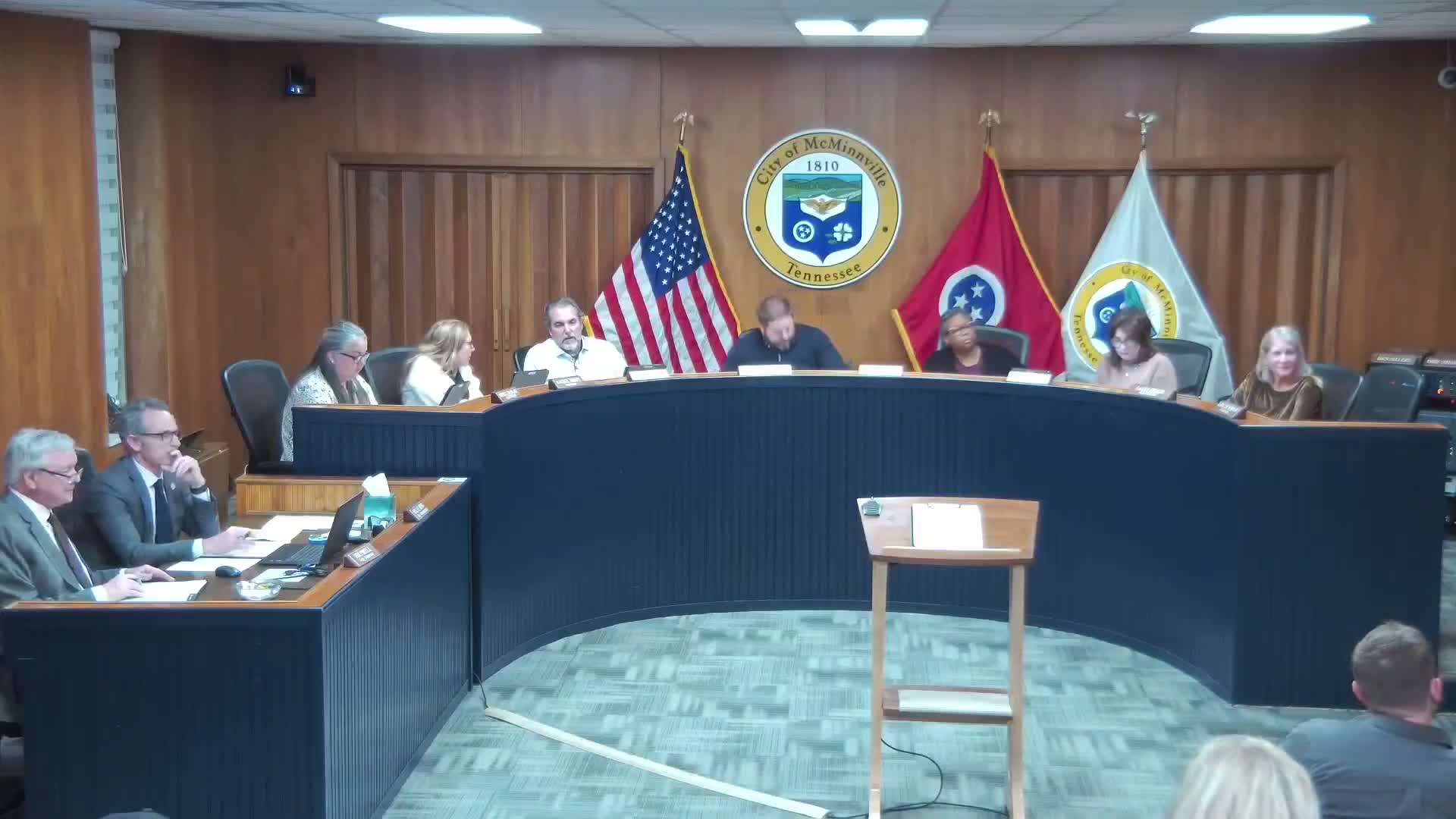
Summary
At a public hearing in McMinnville, residents voiced concerns about a proposed stormwater utility fee tied to impervious surface assessments, asking about appeals, exemptions, credits, oversight, and how funds would be managed; the hearing was closed for staff follow‑up and board consideration.
McMinnville officials opened a public hearing to gather comments on a proposed stormwater utility fee intended to fund stormwater maintenance, mitigation, water‑quality projects and compliance with the MS4 permit.
Speaker 5 explained the procedure and said public comment would be entered into the record; staff will consider questions for follow‑up. Multiple residents urged more data, transparent billing, and protections for renters, fixed‑income households and small businesses.
An early commenter warned that measuring and taxing impervious surface could increase housing and construction costs, arguing that "53% of the people in this town rent" and that pervious pavements add complexity and cost rather than reducing total runoff. Tony Lawrence, who said he is retired and on a fixed income, told the board to "live with the income you have" and to avoid adding expenses that would burden taxpayers.
Kelly Walker (affiliation: "Warren First 9 through 1") presented a list of specific questions, including whether county residents served by city water but living outside city limits would be affected, whether property owners would have an appeals process if impervious assessments are incorrect, whether the fee is expected to increase over time and what safeguards would limit increases, what oversight or review would ensure fairness, which building types would be exempt, and whether aldermen would disclose how the fee affects properties they own.
Casey Herbert noted the city's obligation under the TDEC MS4 permit and asked what changes require the new fee and how charges would be allocated for commercial properties with shared parking or multiple tenants. Joe Schoolfield urged quantified metrics and a clear plan showing backlog, maintenance needs and how proposed rates correspond to identified work, and recommended hardship exemptions, mitigation credits, an annual independent audit and a performance review in 2–3 years to evaluate the fund's effectiveness.
Small‑business owner Jeremy Hamilton said he would be affected at both his home and his business, raised unresolved water‑service problems at one of his parcels, and objected to adding a fee while service issues persist. Charles Dodson, who identified himself as a District 2 Warren County commissioner, warned that added fees could hinder business recruitment and asked the city to seek other solutions. Leah Edwards, a local realtor, said recurring fees reduce housing affordability and asked for clear, itemized information on billing, calculation, appeals and potential future increases before adoption.
Speaker 5 closed the public hearing after hearing all comments; the record will be considered by the board and staff for follow‑up. No formal vote on the proposed fee was recorded at this meeting.