Get Full Government Meeting Transcripts, Videos, & Alerts Forever!
Get email alerts on the Probation Reports And Bills topic
No spam. Unsubscribe anytime.
Thirteenth Circuit probation committee accepts department report, approves January bills
Summary
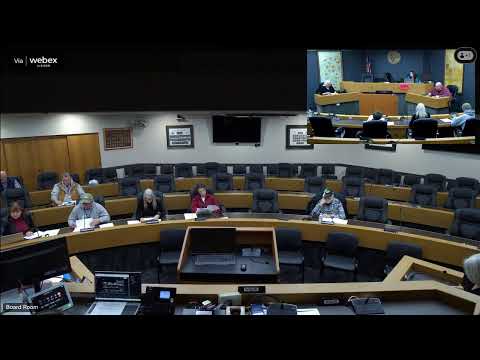
At its Feb. 11 meeting the Thirteenth Circuit Probation Committee accepted department reports, approved payment of January bills and reviewed juvenile and adult caseloads, probation-fee collections and staffing for LaSalle, Bureau and Grundy counties.
The Thirteenth Circuit Probation Committee met Feb. 11, 2026, and voted to accept the department report and authorize payment of January bills after staff presented juvenile and adult caseload statistics, probation-fee orders and collections, and staffing updates across LaSalle, Bureau and Grundy counties.
Susan Dobbs presented the January 2026 statistical reports. She said LaSalle County had 91 active juvenile cases and six administrative juvenile cases; Bureau County had 23 active juvenile cases and two administrative cases; Grundy County had 17 active juvenile cases and zero administrative cases. Dobbs reported the circuit’s juvenile active caseload was 131 and the juvenile administrative caseload was 8, for 139 juveniles on probation in the circuit.
On adult caseloads and fees, Dobbs said LaSalle County had 498 active adult probation cases and 283 administrative adult cases; Bureau County had 122 active and 43 administrative adult cases; Grundy County figures were reported as active ~145 (transcript unclear) and 199 administrative cases. For January, Dobbs reported fee orders and collections by county: LaSalle ordered $6,750 (ordered to date $12,300; collected $2,281.18; collected to date $5,020.01); Bureau ordered $1,500 (ordered to date $3,600; collected $2,372.85; collected to date $3,410.85); Grundy ordered $8,445 (ordered to date $17,045; collected $1,570; collected to date $2,545.27). Circuit totals reported were $16,695 ordered in January, $32,945 ordered to date, $6,224.03 collected in January and $10,976.13 collected to date.
Committee members questioned a possibly missing line-item amount for Marco Technologies (the copier/print contract) in the Grundy bills. Susan Dobbs and Chuck Goodwin said they would follow up and email the committee the precise figure. Dobbs listed Grundy County’s total January bills as $6,344.40 and noted a $5,604 software maintenance payment to Goodness Associates.
Members also discussed client incentives included in LaSalle County’s bills (total $110.26). On examples of allowable incentives, Chuck Goodwin said these could be “something as simple as a candy bar” for juveniles doing well, or practical items for adults such as work boots or emergency housing; Dobbs added bus passes are used to break down barriers so clients can attend work or appointments.
Grundy County representative Doug Varese asked about low collections compared with amounts ordered (citing the $17,045 ordered-to-date vs. roughly $2,500 collected for Grundy). Chuck Goodwin explained officers ask clients about fee payments during appointments, encourage regular payments (commonly $25 per month), and that unpaid balances are monitored and eventually sent to collections when a probation term ends.
A motion to accept the department report and pay the bills (mover language in the record referenced Mary Jane Marini) was made and seconded by Georgia Voda; the committee voted in favor and the motion carried. Committee members confirmed the bills payment had been handled during the vote. The group reported staffing levels: Bureau and Grundy counties are fully staffed; LaSalle County has one open position with a tentative hire expected to start next week, which the presenter said would make LaSalle fully staffed.
The committee set its next meeting for March 11, 2026, and adjourned after a motion to adjourn was seconded and approved.
The committee did not take action on policy changes or legislation; Chuck Goodwin noted ongoing legislative activity and briefly referenced work on the “safety act” and an anticipated increase in presentence investigations that may raise caseloads in the coming months.