
Committee advances House Bill 78 to fund forest health grants aimed at reducing wildfire risk and protecting water
Get AI-powered insights, summaries, and transcripts
Sign Up Free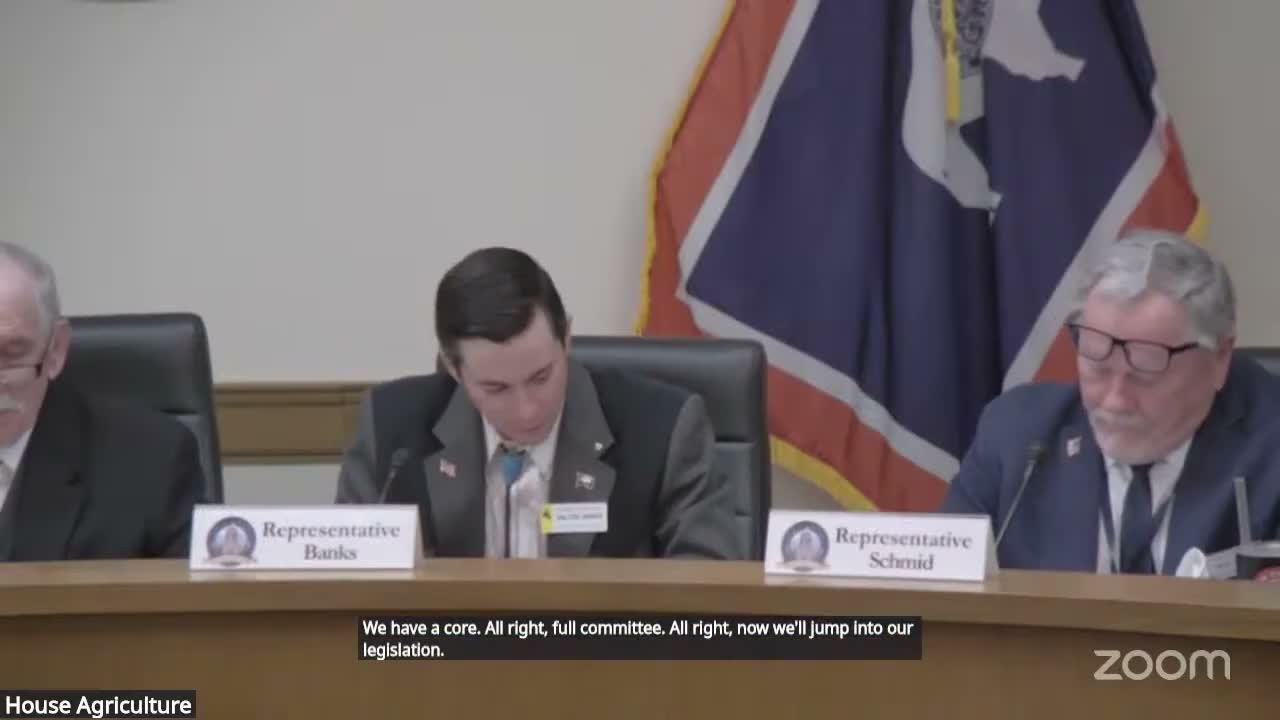
Summary
House Bill 78, a forest health grant program that would fund projects on state, private and strategically selected federal lands, received a unanimous committee 'due pass' after testimony from conservation groups, industry and state forestry officials emphasizing wildfire prevention, water protection and cost‑share opportunities.
House Bill 78, a measure to establish a forest health grant program, moved forward after a joint Select Water and House Agriculture Committee hearing that featured presentations from the bill sponsor, state forestry officials and a range of stakeholders.
Senator Larry Hicks, the bill presenter, told the committee the legislation is a refined version of a measure that passed the Senate last year and is intended to address deteriorating forest conditions, rising wildfire suppression costs and impacts to water yield and other natural resources. “This is actually the second year that this bill has come through you,” Hicks said, describing the measure as a “rational, reasonable, and much‑needed first step” to restore forest health.
The bill establishes a new state account for forest health projects and authorizes the state forester to use funds for projects on state and private lands. The current draft expands eligibility to permit strategic partnerships on national forest lands where state funding would be used to leverage federal cost‑share—Hicks said the intent is to enable 50/50 cost‑share arrangements where a strategic national forest project would protect adjacent state or private properties.
Stakeholders broadly supported the proposal in public testimony. Jim McGavin of the Wyoming Stockgrowers Association told the committee HB 78 focuses on prevention rather than paying only for post‑fire recovery. “By recognizing here that you could have programs that involve private land with the participation … of the state trust lands, and even federal lands, that address reducing fire risk in a broader area, I think, is really critical here,” McGavin said.
Environmental and conservation groups emphasized water benefits. Haley Mortimer, Wyoming state director of The Nature Conservancy, told lawmakers that “70% of the state's surface water comes from our forests,” and framed the bill as a way to secure water by maintaining forested headwaters.
State forestry officials described implementation examples and funding mixes. Matt Marshall, assistant state forester for operations, highlighted the Rob Roy fuels project near Cheyenne, noting roughly 275 acres were treated in a phased approach using timber receipts, municipal Board of Public Utilities funds and federal dollars to complete fuels reduction work around a reservoir that helps supply local water.
Conservation districts asked the committee to allow modest administrative costs for local implementers; Holly Kennedy representing 34 conservation districts said small districts often operate with one to three staff and need administrative funding to manage multiple projects and grant applications.
After public and written testimony from industry, conservation groups and state agencies, Representative Provenza moved the bill; Representative Strzok seconded. The committee recorded nine ayes and no nos and reported HB 78 as a due pass to the next stage.
The committee did not adopt any substantive amendments during the hearing; proponents and administering agencies indicated the state forester would set program criteria and prioritize projects that protect water infrastructure and provide strategic landscape benefits.
The committee's next procedural step is to transmit the due‑pass recommendation to the next committee or chamber as prescribed by legislative rules.