
House TRW committee hears mixed testimony on HB15, a right-to-repair bill for digital electronics
Get AI-powered insights, summaries, and transcripts
Subscribe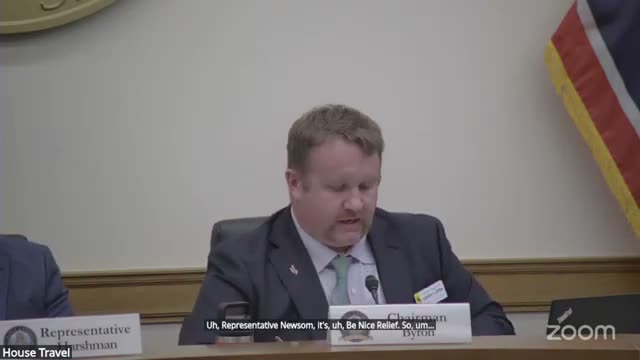
Summary
Representative Yin presented HB15 to guarantee owners and independent shops access to repair tools and documentation for consumer digital electronics; witnesses praised consumer and small-business benefits while industry urged exemptions for security systems, trade secrets and existing MOUs; committee laid the bill back for further work Thursday at noon.
CHEYENNE — The House Transportation, Rights & Welfare Committee on Thursday heard more than an hour of testimony on House Bill 15, a proposal to guarantee consumers and independent repair shops access to tools, parts and documentation needed to fix "digital electronic equipment." Representative Yin, the bill sponsor, presented the measure and said it was narrowed through interim work to cover consumer and small-business electronics rather than farm implements or automobiles.
The bill’s sponsor, Representative Yin (minority floor leader), told the committee the proposal seeks to restore owners’ ability to repair devices they purchased and to allow independent repair providers access to the same diagnostic tools and documentation manufacturers provide to authorized service centers. "The ability to repair a device should be something a property owner has the ability to do for their own devices," Yin said during his presentation.
Supporters, including rural and small‑business groups, told lawmakers the change would reduce downtime and costs in areas with few authorized dealers. "Right to repair will save our agricultural communities thousands of dollars by eliminating corporate middlemen and empowering farmers to fix their own equipment," said Ara Arano of the Rocky Mountain Farmers Union, who also offered amendment language to clarify date coverage and to include agriculture. Michael Smith, Wyoming state director for the National Federation of Independent Business, said the bill would expand repair choices for small businesses and rural residents.
Industry and trade groups pressed for narrower language and explicit exemptions. Representatives of ADT and other security firms urged excluding home-security and life‑safety systems, arguing that published manuals and diagnostic tools could be misused to disable alarms and put communities at risk. "If manuals are out there that show how to take apart an alarm system or reprogram it, it jeopardizes not just that person, but anyone who has an alarm system," testified Holly Borgman of ADT.
Manufacturers and trade associations also raised concerns about intellectual property, the potential for reverse engineering and uneven coverage that could unintentionally pull in industrial products. Mark Arata, director of government affairs for the National Electrical Manufacturers Association, asked lawmakers to clarify trade‑secret safeguards and narrow the definition of covered equipment so lighting systems and other industrial components are not swept into the law.
Some witnesses warned the draft’s language on enforcement could allow private lawsuits against manufacturers; the Consumer Technology Association urged limiting enforcement to the Wyoming attorney general, mirroring approaches used in other states. The CTA also flagged confusing phrasing about security-lock bypasses and asked that language be removed or clarified.
Repair advocates such as Kyle Wiens, CEO of iFixit, urged the committee to preserve broad repair access, saying many state laws already accommodate targeted exemptions while allowing consumers to fix phones, laptops and similar devices. "If people can fix their consoles, they will play games," Wiens said, characterizing game‑console exemptions as anti‑piracy industry requests rather than a repair‑access necessity.
Committee members asked repeated questions about the scope of exemptions, whether the bill creates security backdoors, and whether it should apply to devices already in consumers’ possession. Representative Singh urged nuance and noted the exemption list was shaped by consensus in the interim: "Do you own your own property if you need permission to operate your own property?" Singh asked, framing the debate as one about ownership and control.
Public testimony reflected a mix of views: farmer and small‑business groups emphasized economic and rural-reliability benefits; industry groups sought tightened language to protect trade secrets, security systems and existing MOUs that some agricultural groups rely on.
The committee closed public comment and laid HB15 back for further work "to Thursday upon noon adjournment," signaling additional drafting and negotiations are expected before lawmakers take a final stance. No formal vote was taken Thursday; the bill will be revisited by the committee on Thursday at noon.