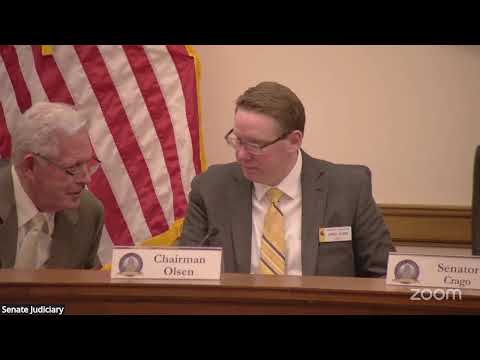
Senate Judiciary Committee advances bill raising theft penalties, lowering repeat-offense threshold
Loading...
Summary
The committee moved Senate File 7, which raises misdemeanor maxima and lowers the repeat-offense threshold that converts repeated thefts into a felony from five offenses to three; business groups and law enforcement testified in favor, while prosecutors offered limited statewide data on projected felony counts.
The Senate Judiciary Committee on Monday moved Senate File 7, a committee bill that increases misdemeanor penalties for many thefts and reduces the number of prior offenses required to charge a felony from five to three. Committee chair Olsen said the bill raises the misdemeanor jail term to up to one year and increases the fine cap to $1,500 for property valued under $1,000; the bill is effective July 1, 2026.
Business groups and law enforcement told the committee the changes respond to growing retail theft and organized theft rings. "Retail theft is ... a major issue to our industry," Mike Mosier of the Wyoming State Liquor Association said in testimony supporting the bill. Amber Leyba of the Greater Cheyenne Chamber of Commerce, speaking for the Wyoming Retail Association, said the measures would "help protect businesses, employees, and customers." Michael Smith, Wyoming state director for the National Federation of Independent Business, said small businesses operate on thin margins and stronger penalties would help deter theft and reduce losses.
Alan Thompson, executive director of the Wyoming Association of Sheriffs and Chiefs of Police, said lowering the repeat-offense threshold would add a prosecutorial and law-enforcement tool. Thompson cautioned that local charging and prosecutorial discretion remain, and that he could not provide statewide counts showing how many more people would be prosecuted as felons under the proposed threshold; Thompson offered to survey county prosecutors for better numbers.
Committee members pressed that data point during questioning. Chairman Olsen and Senator Kolb said they believe repeat offenders track misdemeanor thresholds and that adjusting the threshold can change behavior, while prosecutors and sheriffs warned there are limits to deterrence and practical challenges in measuring the bill's impact.
After closing public testimony, the committee voted on a motion to move the bill. Roll-call recorded Senators Crago, Crump, Kope and Chairman Olsen voting aye; Senator Hicks was excused. The clerk recorded "4 ayes when excused." The bill advances to the next stage in the legislature.