UN says routine congratulatory letters are not endorsements after questions about Iran
Loading...
Summary
Journalists pressed the UN about a standard congratulatory letter sent to Iran amid allegations of violence; the UN spokesperson said the letters are standardized for all member states and are not endorsements of government policies, and reiterated the secretary‑general has spoken out about human rights concerns.
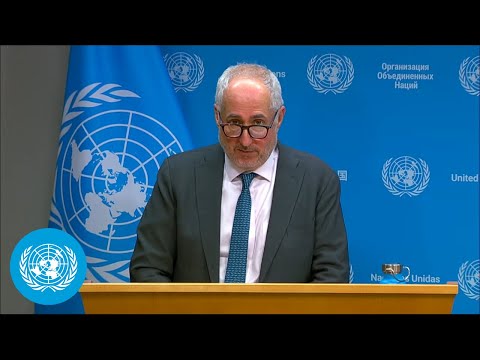
During the briefing, reporters pressed the United Nations on the office’s practice of sending standard congratulatory letters to member states on national holidays after questions about recent killings and the timing of such a letter to Iran.
A reporter asked whether it was wise to send a congratulatory letter given the reported killing of thousands of protesters, and whether the secretary‑general should take a stronger public stance. The UN spokesperson responded that the messages sent on national days are standardized and have been a decades‑long practice: “Each member state gets the exact same letter…It should not be interpreted…as an endorsement of wherever policies may be going.”
Asked how that squares with Iran’s foreign minister being due to address the Human Rights Council later in the month, the spokesperson said decisions on who addresses the Council are made by that body and that membership organizations permit members to speak. She added that the secretary‑general has repeatedly spoken out about human rights violations in Iran privately and publicly and that the UN human rights mechanisms have been involved.
Why it matters: reporters framed the letters’ optics against allegations of serious human rights abuses. The UN framed the correspondence as routine diplomatic practice and reiterated other avenues—statements, Human Rights Council processes and private engagement—are used to address rights concerns.
What’s next: the spokesperson said the SG will continue to raise human rights concerns with Iranian officials in meetings and that questions about the Human Rights Council’s speaker list should be addressed to the Council’s president.