
UN briefing highlights humanitarian crises in Sudan, DRC cholera surge, Rafah evacuations and aid to Ukraine
Get AI-powered insights, summaries, and transcripts
Subscribe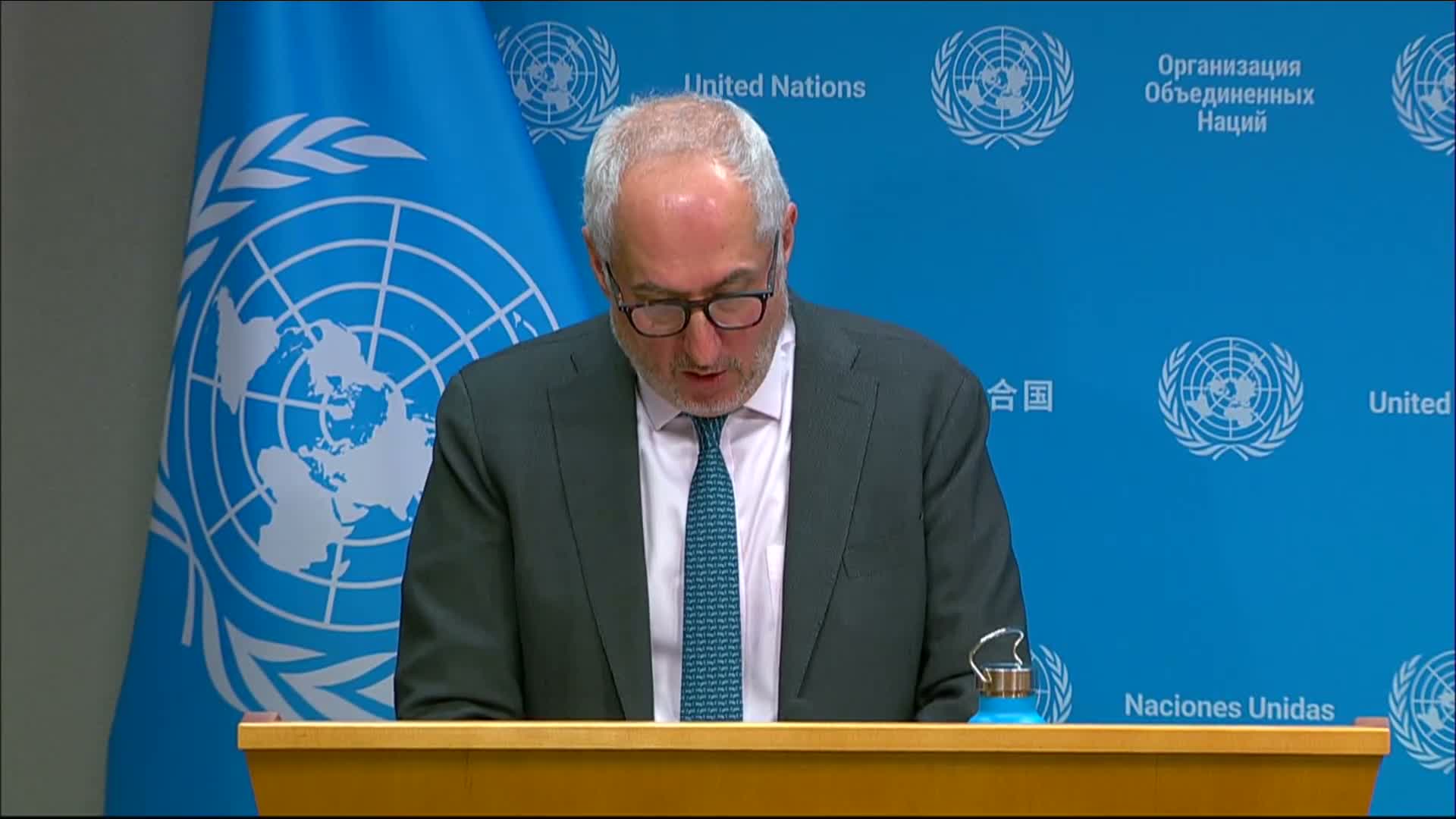
Summary
At a UN press briefing, the spokesperson outlined escalating civilian harm in Sudan, a severe cholera outbreak in the Democratic Republic of the Congo supported by a new CERF allocation, limited Rafah crossings and medical evacuations in Gaza, and a convoy reaching frontline communities in Ukraine.
The United Nations on Thursday detailed multiple escalating humanitarian crises and ongoing relief efforts, warning that civilians and critical infrastructure are increasingly at risk.
Spokesperson 'Steph' said the UN and partners have recorded repeated aerial strikes in Sudan that are placing civilians “at grave risk” and “directly hitting humanitarian and public infrastructure.” She cited reports from humanitarian partners and the Sudan Doctors Network that a dawn drone strike in Al Rahad, North Kordofan, hit a mosque and reportedly killed children and injured others. The briefing also referenced a recent strike on a primary school in Dilling, South Kordofan, and damage to a World Food Programme warehouse in Kadugli from suspected rockets.
Why it matters: the UN urged all parties to respect international humanitarian law and called for rapid, sustained and unhindered humanitarian access so “life‑saving assistance can reach all of the people who need it.” The agency said millions remain in need across Sudan.
Humanitarian logistics: the spokesperson said a multi‑agency UN convoy of 41 trucks carrying nearly 800 metric tons of food and supplies left El Obeid for Kadugli, a route previously closed. In South Kordofan, the UN and partners distributed nearly 1,600 metric tons of food to close to 70,000 people, but rising arrivals of displaced families are depleting stocks. The International Organization for Migration (IOM) was cited as reporting more than 115,000 displaced people across the Kordofan region since last October.
DRC cholera response: Jean‑Pierre Lacroix, head of UN peace operations, concluded a visit to the Democratic Republic of the Congo and discussed mandate implementation following Security Council resolution 2808, the spokesperson said. Separately, the UN warned of the country’s worst cholera outbreak in 25 years: since the start of the year the UN reported more than 1,300 suspected cases and 35 deaths and announced a $750,000 allocation from the Central Emergency Response Fund (CERF) to scale up health responses. The UN noted last year saw roughly 71,000 suspected cholera cases and more than 2,000 fatalities.
Gaza access and evacuations: since Rafah reopened in early February the spokesperson said just over 220 people have been able to move in each direction through the crossing. The UN supported medical evacuations of 18 patients and 26 companions through Rafah and received 41 additional returnees at a UN reception center. The briefing highlighted education and child protection work: partners established four new learning spaces serving more than 5,500 children, about 450 temporary learning spaces are operating across Gaza, child‑protection partners provided winter assistance and psychosocial support to more than 6,500 children and caregivers, and nearly 3,800 children received warm clothing.
Ukraine frontline relief: the UN said a convoy reached Kopokhovosk in the Dnipro region, delivering medical and hygiene supplies. The town held roughly 10,000 residents before the full‑scale war; the spokesperson said about 500 remain, mostly older people and persons with disabilities.
What’s next: the UN emphasized the need for more flexible funding to sustain responses and repeated calls for unrestricted humanitarian access in affected areas.