
Councilor Melinda Griesemer urges payment of outside counsel, accuses county attorney of obstructing state investigation; motion fails
Get AI-powered insights, summaries, and transcripts
Sign Up Free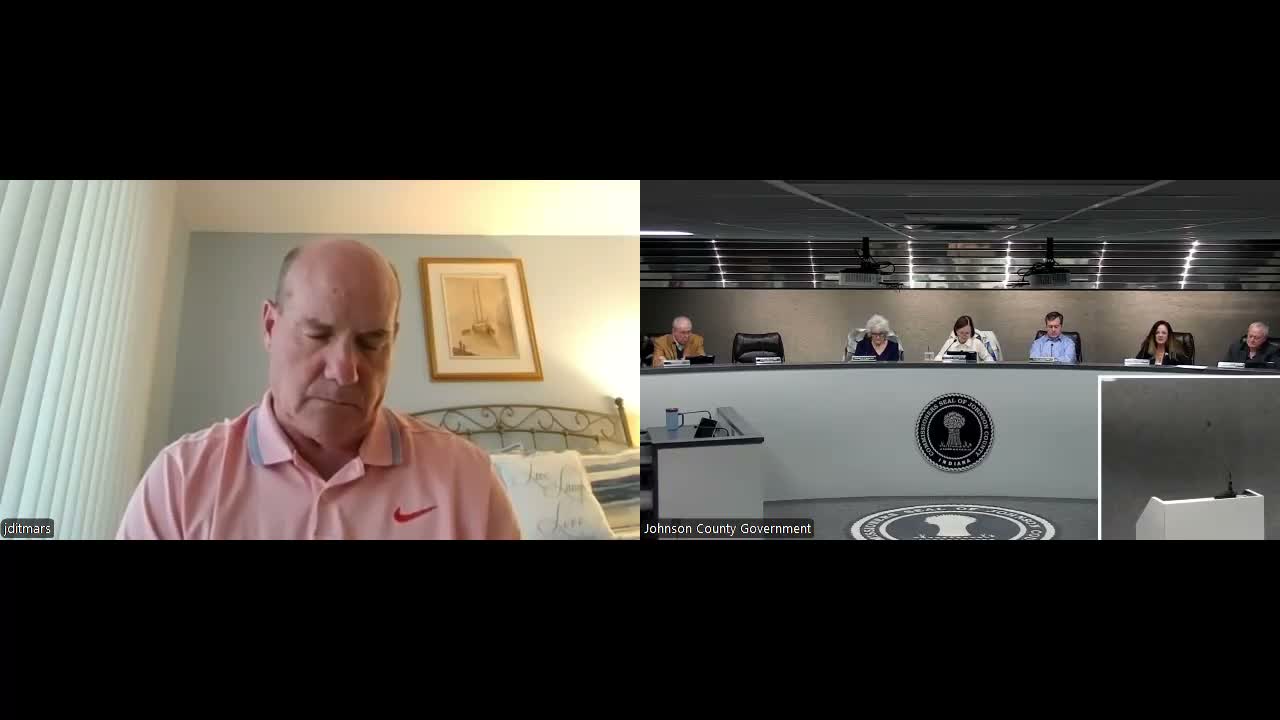
Summary
Councilor Melinda Griesemer told the Johnson County Council her county email was tampered with, that she requested a state police investigation, and that the county attorney refused to cooperate and billed the county for private counsel; her motion to approve the outside counsel invoice failed for lack of a second.
Councilor Melinda Griesemer addressed the Johnson County Council on Feb. 9 seeking approval to pay the invoice of outside conflicts counsel Michelle Harder. Griesemer said her county email account had been tampered with and, because the county does not have a human-resources director, county policy required employee-related issues go to the county attorney — a situation she said created a conflict when the county attorney became a subject of the inquiry.
"I want to speak plainly, calmly, and transparently tonight," Griesemer said. "I have no financial conflicts of interest to disclose." She told the council she contacted the state police to investigate the email compromise and said the county attorney "did not cooperate with the state police investigation" and instead retained private counsel who submitted an invoice the councilor described as "inflated and questionable." Griesemer said the invoice included billing for a conversation with a council member and that the county attorney’s refusal to cooperate raised "questions" for the public.
Griesemer also said she contacted Indiana Attorney General Todd Rokita and asked the council to approve payment for Michelle Harder, whom she described as necessary to address the conflict and restore integrity to the process. "Finally, Michelle Harder's invoice must be paid," Griesemer said, and she called for the resignation of county attorney Tiffany Costly, citing obstruction of a state police investigation and resulting taxpayer costs.
A council member questioned whether the council had legal authority to approve such a payment. That member told Griesemer, "by law, we cannot pay this invoice"; Griesemer disputed that legal assessment, saying her attorney counseled otherwise.
The chair emphasized that "these are allegations" and noted the state police investigation had not concluded. Griesemer made a motion to approve payment of what she called a "reasonable" invoice for Michelle Harder, but no councilor seconded the motion and it failed.
Why it matters: The exchange raised questions about conflict-of-interest procedures, use of outside counsel, and the scope of council authority to approve attorney fees. Councilors recorded disagreement about the legal permissibility of paying an individual council member’s outside counsel, and the matter will remain unresolved until the state police complete their inquiry or the council revisits the issue.
The meeting adjourned following the failed motion.