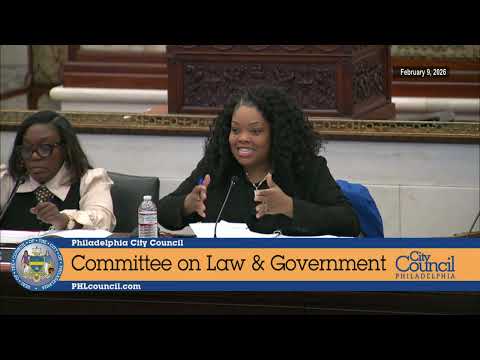
Council committee endorses making Youth Ombudsperson permanent; bill and companion resolution advanced
Loading...
Summary
After testimony from local families, advocates and an ombud from Los Angeles, the committee voted to approve an amendment and to report Bill 251,098 and Resolution 251,108 (charter change to enshrine the Office of the Youth Ombudsperson) favorably out of committee; sponsors and DHS said permanence would strengthen oversight and investigative authority.
Philadelphia City Council’s Law & Government committee advanced legislation on Feb. 12 to make the Office of the Youth Ombudsperson permanent, following more than two hours of testimony from national and local advocates, city officials and affected families.
Council member Jamie Gaudier, the bill sponsor, framed the measure as a charter change to enshrine an independent office that promotes the health, safety and welfare of youth placed in juvenile justice, child welfare or behavioral‑health residential settings. Michelle Lucarelli Beltran, Los Angeles County’s Youth Ombudsperson, joined remotely to describe how a locally based ombud office provides independent, confidential investigation and policy recommendations and urged sufficient staffing and funding; she estimated an office budget on the order of $1.3 million for robust operations in a large county.
Local witnesses — including Tracy Johnson, Philadelphia’s Youth Ombudsperson (OYO); DHS Commissioner Kimberly Ali; advocates from Children First and the Defender Association of Philadelphia; and youth and family witnesses who described abuse, medical‑record redactions and abrupt discharges — said the OYO’s work since 2023 has identified systemic problems (for example, improper use of seclusion at the Philadelphia Juvenile Justice Services Center) and helped effect corrective actions. Johnson said the office’s current team of five, operating on a $600,000 budget, has educated youth on rights, surveyed hundreds of young people and made site visits to far‑away facilities; she asked that permanence provide clearer authority, formal access to records and consistent investigative powers.
The Department of Human Services said it already collaborates with OYO under a memorandum of understanding; DHS described its own monitoring work and a Service Concern Unit (PMT) that conducts assessments and corrective action plans. DHS said it would continue to work with a chartered OYO if enacted.
After testimony and some brief public comment, the committee temporarily paused the hearing to conduct the public meeting. During the session the committee acted by voice vote: Council member Kendra Brooks moved and the committee approved an amendment to Resolution 251,108; the committee then voted to report Resolution 251,108 (as amended) with a favorable recommendation and to report Bill 251,098 with a favorable recommendation and to suspend council rules to permit first reading at the next session. The clerk recorded voice votes and the chair announced the motions carried.
What it means: If enacted by a later city‑wide vote (this measure would appear on a special election ballot if council and the appropriate officers proceed), the charter amendment would make the OYO a permanent city office, clarifying its powers and (per testimony) enabling a more stable budget and stronger investigatory authority.
Next steps: The committee reported the measures favorably; the bill was reported out with rules suspension for first reading at the next council session. Council staff and the sponsor said they will draft enabling legislation to define jurisdiction, access to records, reporting cadence and confidentiality protections, and will circulate proposed ordinance language for committee review.