Get Full Government Meeting Transcripts, Videos, & Alerts Forever!
Get email alerts on the Ai Policy topic
No spam. Unsubscribe anytime.
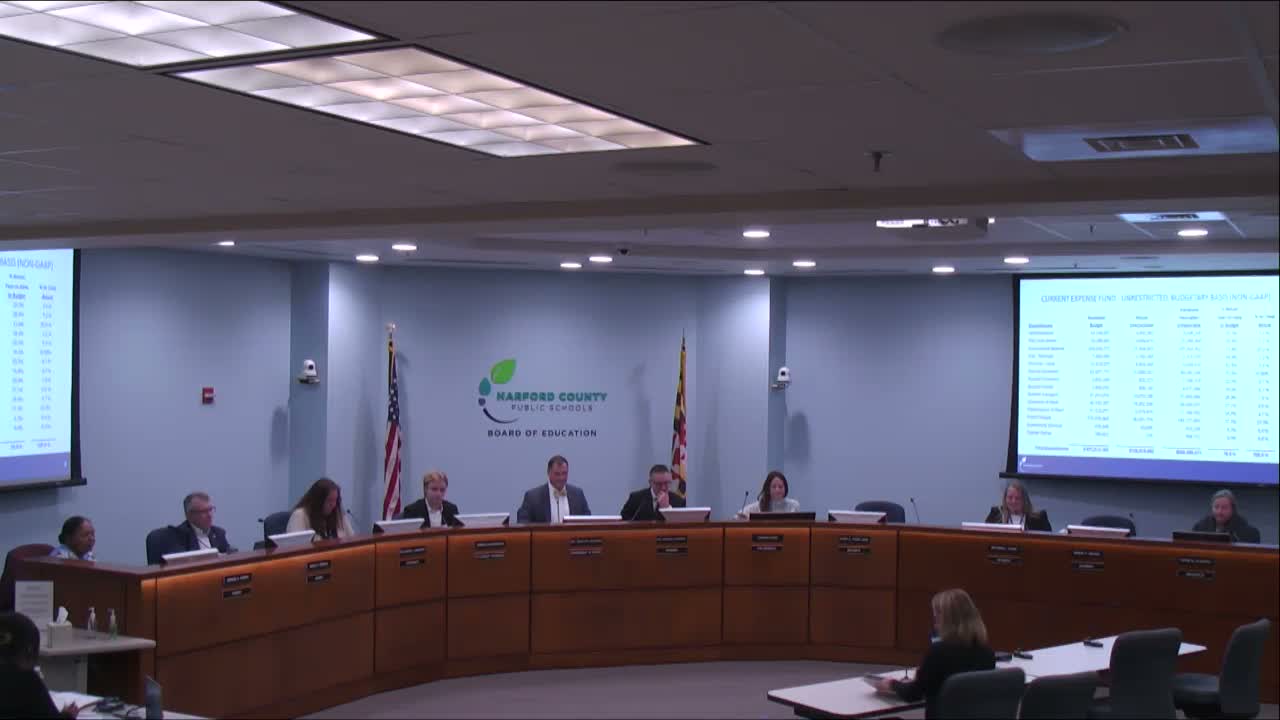
Harford schools present AI policy draft; board presses for clearer privacy and opt-out rules
Summary
The board reviewed a proposed AI and emerging-technology policy focused on "human in the loop" guidance and grade-level limits; several trustees requested explicit references to PPRA/COPPA/CIPA, clearer parental opt-out mechanisms, ongoing vendor vetting and explainability requirements.
Harford County Public Schools presented a draft policy to govern the ethical and instructional use of artificial intelligence and related emerging technologies. Presenters said the proposal rests on six guiding principles including ethical use, fairness, AI literacy and a "human in the loop" approach that prioritizes teacher oversight.
The policy's instructional guidance is tiered: K-4 levels would include no AI use or teacher-led demonstration; grades 5-7 would build on those foundations; grades 8-12 would include controlled uses such as idea generation and refinement with required citation. Presenters said a companion procedure will capture operational details and allow more rapid updates as tools evolve.
Board members asked for explicit language about federal compliance and parental rights. Diane Alvarez told the board the draft omitted two important federal obligations and called for naming them: "PPRA is the Parent Protection Rights Act and CIPA is... basically Information Protection Act for anything on the Internet," she said, and asked that both PPRA and CIPA be added to the compliance section. Other members raised COPPA-related concerns for students under 13 and asked how verifiable parental consent will be collected.
Presenters replied that several federal statutes were referenced in the compliance section and pledged to work with counsel to ensure explicit citations and to publicize the companion procedure and the vetted-tool list on hcps.org. They said the parent permission form already points families to a technology-approval list and that parents may opt out of supplemental tools; essential curriculum platforms would remain subject to data-privacy agreements.
The board directed staff to post the procedure publicly during the 30-day public-comment period and to refine language on statutory compliance, vendor vetting and transparency. The policy will return for further action after the public-comment period.
Next steps: the AI policy and detailed procedure will be posted for 30 days of public comment and returned to the board for final consideration at a later meeting.