Get Full Government Meeting Transcripts, Videos, & Alerts Forever!
Get email alerts on the Budget topic
No spam. Unsubscribe anytime.
San Francisco Fire Department presents $569M base budget as city faces nearly $1B shortfall
Summary
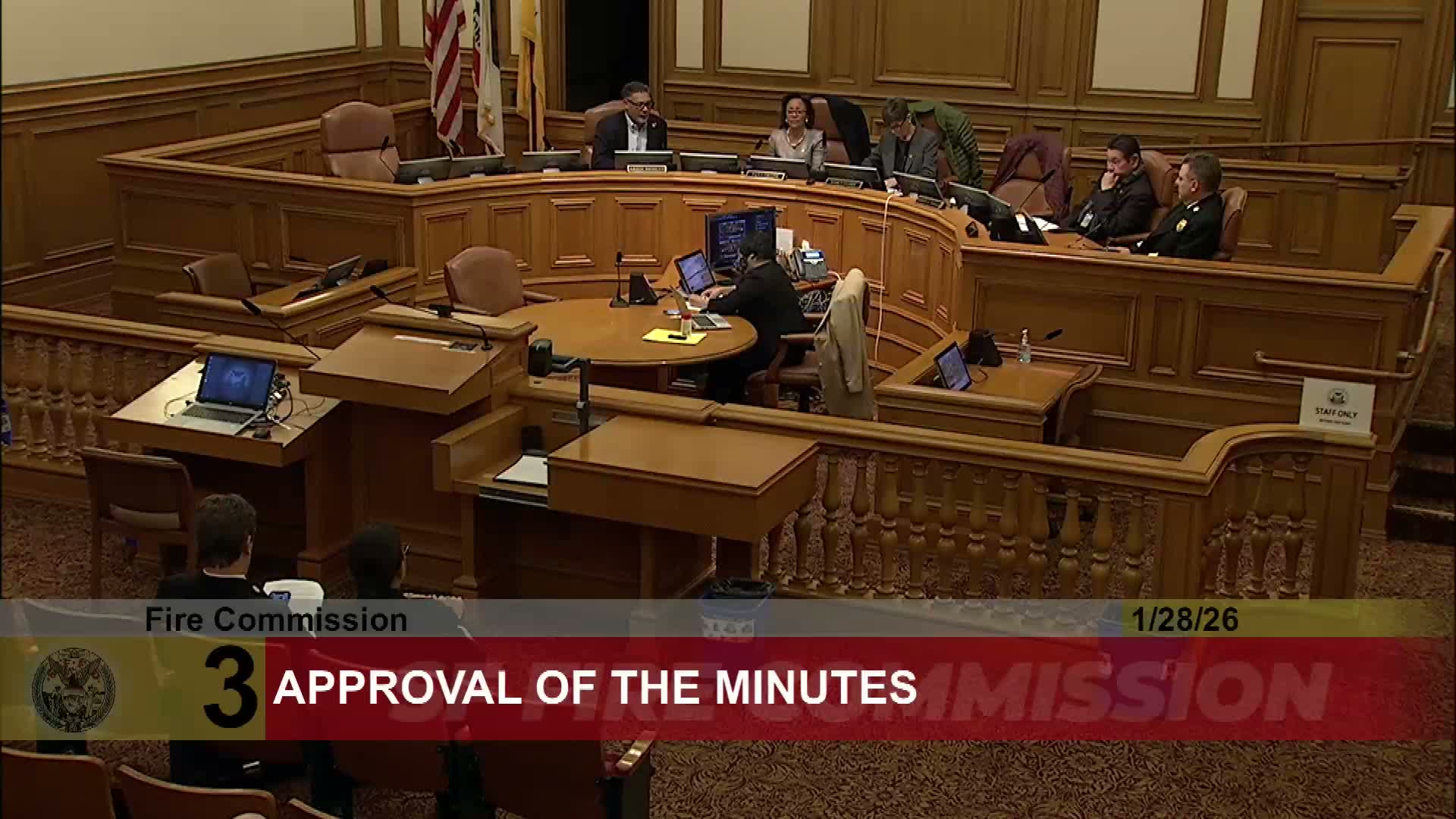
At a Jan. 28, 2026 special meeting, Deputy Director Mark Corso told the Fire Commission the department’s base operating budget is roughly $569 million with about $389 million in general‑fund support; he warned that a citywide structural shortfall approaching $1 billion will shape departmental reductions and revenue efforts.
At a Jan. 28, 2026 special meeting of the San Francisco Fire Commission, Deputy Director of Finance and Planning Mark Corso outlined the San Francisco Fire Department’s proposed operating budget for FY2026–27 and FY2027–28 and framed it against a multi‑year city fiscal shortfall.
Corso said the department’s base operating budget for the upcoming year is “approximately $569,000,000,” an increase of about $13 million from the prior year driven largely by salary and benefit rises. He said roughly $389,000,000 of that total is expected to come from the city’s general fund.
Why it matters: citywide fiscal estimates cited by Corso show a structural deficit approaching $1 billion over two years — “about $296,000,000” in the near term and “$640,000,000” in the second year — which will force Mayoral and departmental decisions on reductions and revenue initiatives. Corso said departments must submit budgets to the mayor’s office by Feb. 23; the mayor must present a balanced budget to the Board of Supervisors by June 1.
Corso told commissioners that about 90–91% of the department’s budget is earmarked for salaries and benefits, leaving roughly 9% for fuel, supplies, fleet, pharmaceuticals and other non‑personnel costs. “That leaves very limited flexibility,” he said, and added that reductions to frontline services would have “severe operational impacts.”
The presentation highlighted areas of focus and constraints: frontline operations (fire suppression, EMS and community paramedicine) dominate costs; the department has benefited from the mayor’s multi‑academy hiring plan, which Corso said has materially reduced overtime; capital projects and major facility repairs largely depend on outside capital (the packet referenced a 2026 bond); and a citywide civilian hiring freeze limits the department’s ability to replace support staff.
Commissioners pressed Corso on revenue and operational questions. In response to a question about EMS revenues, Corso said the department is tracking state legislative proposals and federal actions that could change EMS reimbursement. He also noted that Proposition C funds a significant share of community paramedicine operations through a work order with the Department of Public Health. On airport operations, he clarified that the airport funds airport fire personnel and non‑salary airport costs are covered by the airport’s budget.
In a broader statement, one commissioner praised reductions in overtime tied to recent academy classes but asked how the department and the city would reach the mayor’s target of $400,000,000 in reductions without undermining core services. Chief Dean Crispin told the commission the department has hired in‑house trades staff (plumber, electrician, stationary engineer) to address smaller facility needs, but large capital projects such as roof or boiler work continue to be routed through Public Works and may require charter or code changes to streamline.
Next steps: departments must submit budgets to the mayor on Feb. 23; the mayor’s office will work with the Controller’s Office and the Board of Supervisors through June hearings, with final budget action expected later in the summer. The commission asked staff to return with updates as the mayor’s proposals crystallize.
The commission heard the presentation, asked clarifying questions and did not take a formal vote on the budget at the meeting.