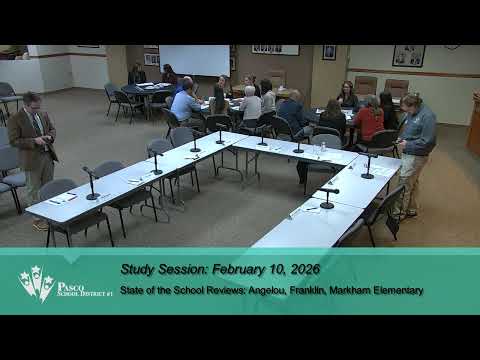
Principals report midyear gains in literacy, math fluency and attendance at Pasco School Board study session
Loading...
Summary
Principals from Maya Angelou, Franklin and Markham Elementary reported midyear progress on literacy, math and social-emotional goals using a one-page data snapshot; schools highlighted improved attendance, a 10% literacy/math target, math-fact fluency routines and requests for district support and volunteer engagement.
Pasco School Board members heard midyear updates from three elementary schools during a state of the schools review, where principals shared brief, table-format presentations of their progress on school improvement plans.
A district staff member opened the session, explaining the purpose: “It is my pleasure to kick off our first round of state of the schools review today,” and described the format—schools use a one-page data snapshot (a “data 1-pager”) to report three goals (literacy, math and social-emotional learning), midyear monitoring results and planned adjustments.
Principals from Maya Angelou, Franklin and Markham Elementary focused on three recurring priorities. Reading remains a primary target; schools reported mixed year-to-year results by grade and use STAR and ARC assessments to track progress. One presenting principal described the literacy objective as a measurable target: “Our literacy goal is to increase the at or above grade level in related to instruction by 10%,” and said the school uses classroom routines and volunteer support to pursue that gain.
Schools also reported steps to boost math skills through brief, daily practice. Presenters described a schoolwide math-fact fluency routine of about 10–15 minutes per day and said teachers are tracking progress with frequent formative checks. In addition to academics, principals emphasized attendance as both an instructional imperative and a barometer of student well‑being; one presenter said month-to-month attendance comparisons from September through January show improvement this year versus last and outlined interventions used to support students.
Social-emotional learning and behavior supports were described as integrated with academic goals. Presenters detailed PBIS-related practices, visual classroom norms and incentives—such as a 40‑book reading challenge, reading “brag tags,” classroom rewards and displays of student work—to build engagement and monitor SEL outcomes.
Several schools noted volunteer programs and targeted teacher training as part of their action plans. A presenter described training and volunteer involvement as key supports for routines such as the “3 reads” strategy and the math fluency practice; principals also said they will adjust interventions when midyear data indicate insufficient progress.
Board members were invited to follow up with individual site visits. The district facilitator closed by asking board members to sign up for building-level presentations to review each school’s more detailed plans. No formal votes or board actions were taken during the study session; the board moved to dinner and the regularly scheduled meeting to begin at 6:00 p.m.
Next steps: principals will continue midyear monitoring, make adjustments where data indicate gaps, and present fuller building-level updates at scheduled site meetings.