
Pasco district outlines special education services, says federal funding covers far less of costs than promised
Get AI-powered insights, summaries, and transcripts
Sign Up Free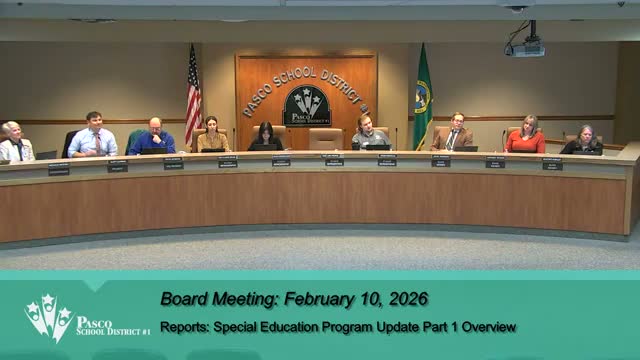
Summary
Tracy Wilson told the Pasco School Board that while the Individuals with Disabilities Education Act envisioned federal funding of 40% of special education costs, Washington districts receive about 15% on average, leaving state and local funds to fill the gap; she reviewed eligibility, services, and next steps for behavior analysts and apprenticeships.
Tracy Wilson, the Pasco School District staff member presenting the first report at the Feb. 10 board meeting, gave an overview of how special education fits within the district’s multi-tiered system of supports and detailed how services are funded and accessed.
Wilson described special education as “specially designed instruction” that complements general education and said eligibility is determined by a team of professionals under Washington Administrative Codes, including general education teachers, parents, school psychologists and special educators. She told the board that special education is funded by both state and federal sources but that ‘‘Congress had promised to fully fund 40% of the cost for special education services, but on average, only provides about 15%,’’ leaving state and local agencies to cover the remainder.
Wilson reviewed the program elements that the district provides, including individualized education plans (IEPs), related services, assistive technology, and interventions ranging from classroom accommodations to home- or hospital-based instruction. She said there are 13 eligible categories for special education (ages 3–22 using the state’s funding window) and emphasized that special education is a service, not a location.
During board questions, a member asked who determines eligibility; Wilson said the district follows Washington Administrative Codes and uses a multi-disciplinary team to conduct comprehensive assessments and make determinations. She also offered to follow up on a requested breakdown of state versus federal percentages for the board’s review.
Wilson closed by previewing subsequent installments of the district’s special education reporting: the addition of board-certified behavior analysts, plans for unified classrooms and inclusive playgrounds, and continued participation in the Washington Special Education Teacher Apprenticeship program.
This report was informational; the board received the presentation and no formal action or vote was taken on special education policy or funding at the meeting.