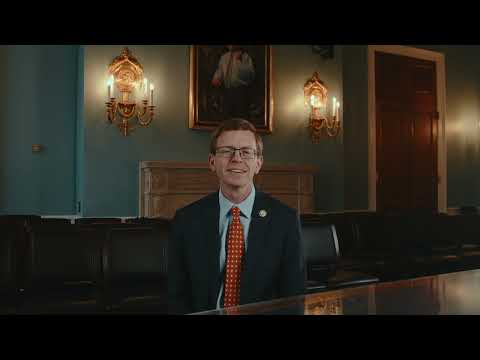
Unidentified speaker at House Agriculture Committee urges passage of five-year Farm Bill
Loading...
Summary
An unidentified speaker at a House Committee on Agriculture event urged Congress to pass a new five-year Farm Bill, saying it would lower costs for producers and consumers, promote agricultural innovation such as precision agriculture, and address inconsistent state regulations; the speaker urged the public to press lawmakers to act.
An unidentified speaker at the House Committee on Agriculture urged Congress to pass a new five-year Farm Bill, saying the absence of a current bill leaves farmers—and nonfarm households—without needed certainty. “Don't have a farm bill yet,” the speaker said, calling for renewed legislative focus.
The speaker framed the Farm Bill as a broad policy affecting both producers and everyday consumers. “Whether you live on a farm or not, the farm bill affects you,” the speaker said, arguing the law helps deliver full grocery shelves, lower prices at the checkout and a more stable supply chain. The speaker added that the bill can support investments in science and technology — citing precision agriculture — that improve yields while reducing inputs and benefit water quality and soil health.
The speaker also raised regulatory and rural-support rationales for a federal bill. They said a new Farm Bill could address a "patchwork [of] state regulations" that overburden producers and hurt farm profit margins, and that programs in the bill reduce household costs in rural areas, including energy and housing-related expenses.
On legislative design, the speaker explicitly supported a full five-year Farm Bill, saying passing a "full 5 year Farm Bill" would give farmers and ranchers certainty about planting seasons and help ensure Americans can feed themselves. The remarks included a call to civic action: "Tell your elected officials. It's time to get the Farm Bill done."
The hearing record does not identify the speaker by name or title beyond the committee context, and the remarks presented assertions and policy arguments rather than enactments or formal votes. No specific bill text, amendment, funding levels or voting outcomes were proposed or recorded in the transcript. The next procedural steps were not included in the remarks; the speaker said only that "Congress is ready to get to work."