
Parole panel grants supervised release to man serving 25-year sentence despite DA objection
Get AI-powered insights, summaries, and transcripts
Subscribe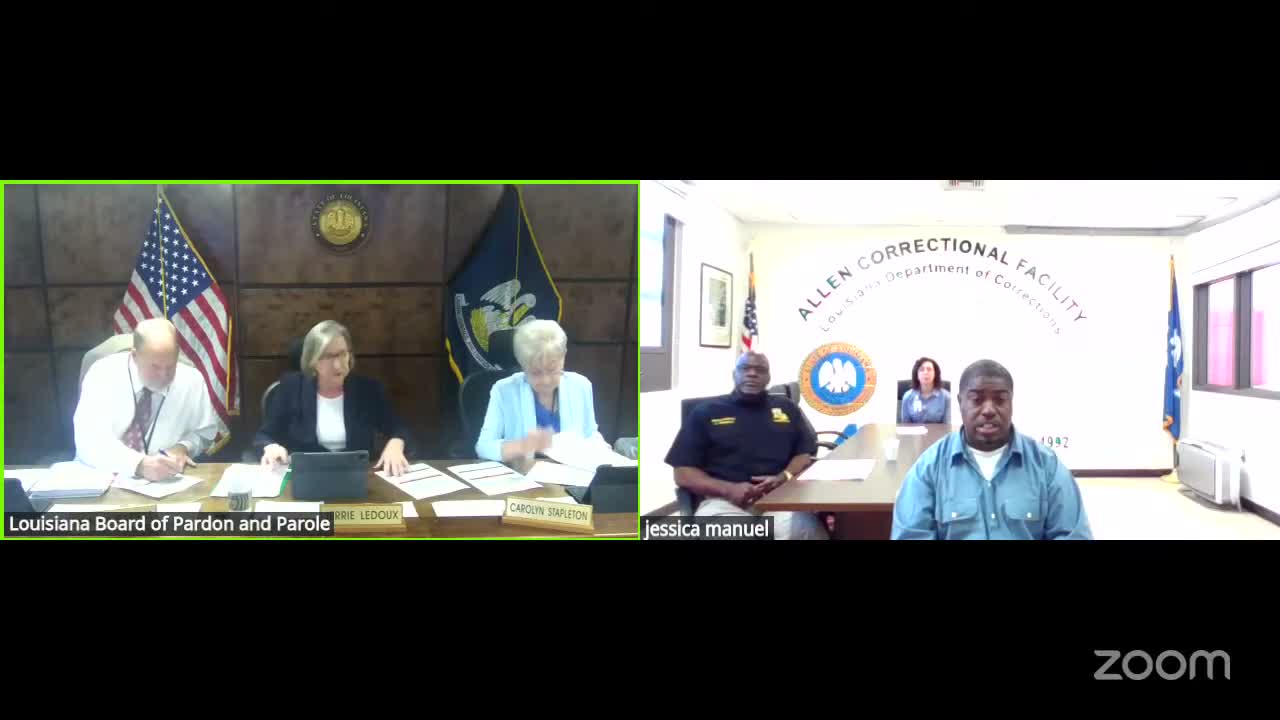
Summary
The Louisiana Committee on Parole voted to grant parole to Derek Sherman, a first‑class offender serving a 25‑year sentence, imposing supervision conditions and approving transfer under the interstate compact to Colorado after family testimony and program completion; the Rapides Parish DA urged denial.
The Louisiana Committee on Parole voted Feb. 11 to grant supervised release to Derek Sherman (500129), who is serving a 25‑year sentence after pleading to a forcible sexual offense. Sherman told the panel he had taken educational and treatment programs in custody and said he takes “full accountability” for his actions.
Family members and prison staff spoke on Sherman’s behalf. His aunt and sister described sustained support and offered housing and job prospects in Denver; a family member said she had reached out to reentry resources and an employer willing to hire Sherman on release. Rapides Parish District Attorney Philip Terrell told the panel that Sherman “confessed to making his own 7‑year‑old daughter perform sexual acts,” and urged the committee to keep him incarcerated, arguing the seriousness of the crime and the terms of the original plea and sentence.
Panel members weighed program completion, low risk scores noted in Sherman’s evaluation and victim‑impact considerations. Mr. Barra, one member, said the victim’s willingness to speak in favor of release “swayed me a little bit” but emphasized strict conditions. The committee’s votes produced a majority in favor of parole with conditions: supervision, continued participation in treatment and monitoring, and transfer under the interstate compact to Colorado for supervision there.
The panel explicitly conditioned release on continued treatment and supervision; members said they expected approved residence, required counseling and monitoring, and adherence to any sex‑offender–specific requirements during parole. The committee recorded that it would not negate the severity of Sherman’s crime while noting his record of program participation and the support network his family offered.
Next steps: The parole grant is contingent on administrative steps for an interstate transfer and on the supervising authorities in Colorado approving the compact transfer. The committee directed staff to complete those steps and to enforce the conditions of supervision if the transfer is approved.