
House adopts committee-of-conference report on bill regulating synthetic media near elections
Get AI-powered insights, summaries, and transcripts
Subscribe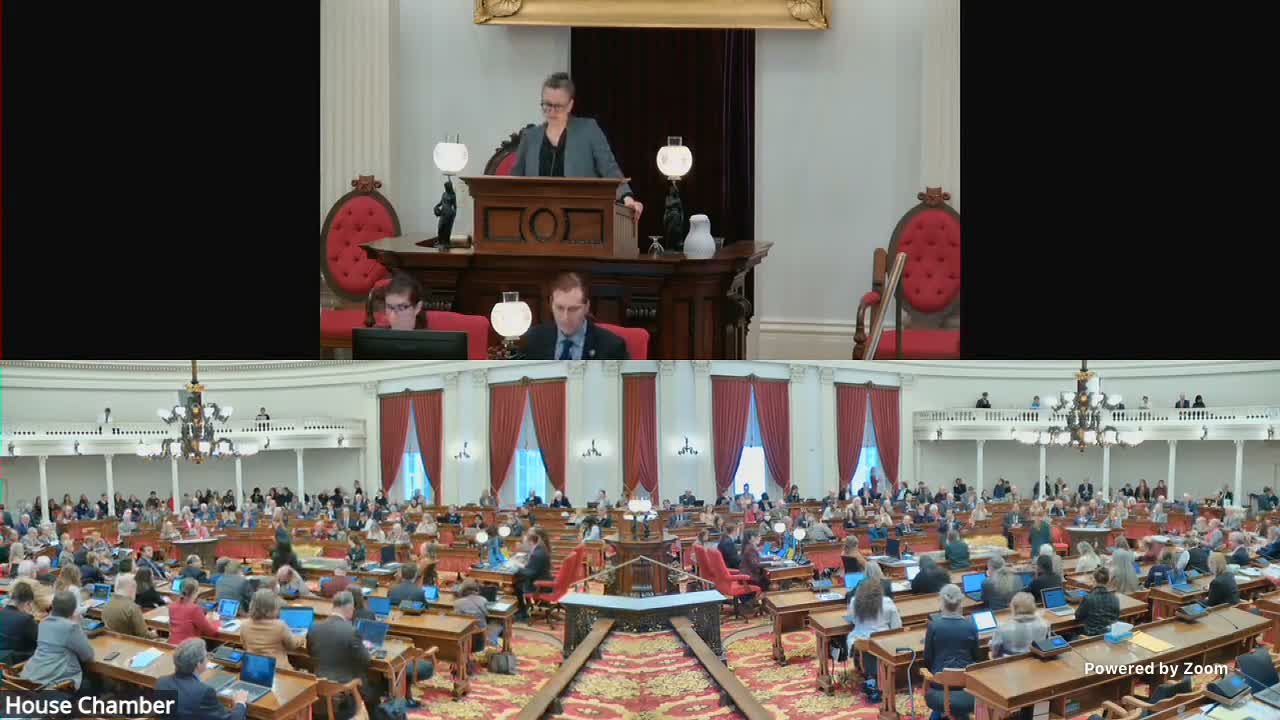
Summary
The Vermont House accepted a unanimous committee‑of‑conference strike‑all report on S.23, which narrows the definition of deceptive synthetic media, requires disclosures for deceptive synthetic media published within 90 days of an election, lists exemptions for certain media/hosts, and establishes fines and enforcement authority for civil investigations.
The House of Representatives on Feb. 11 adopted the committee‑of‑conference report on S.23, an act addressing the use of synthetic media in elections, after the representative presenting the report summarized compromise language that resolved the remaining differences between the chambers.
The presenter, recorded in the transcript as the Member from Verdense, told the chamber the strike‑all report updates definitions to cover synthetic media that reasonably appears to be a realistic representation of an individual (not only a political candidate) and narrows the scope to deceptive and fraudulent synthetic media that injures a candidate’s reputation or attempts to unduly influence an election.
The report requires a disclosure when a person publishes or distributes synthetic media that the person knows is deceptive and fraudulent within 90 days of an election. The disclosure the committee adopted reads: “the media has been manipulated or generated by digital technology and depicts speech or conduct that did not occur.” The report sets accessibility requirements: visible, easily readable disclosures for images and video and audible disclosures delivered at a pitch and pace easily heard for audio recordings; both must be as inclusive as practicable for people with disabilities.
The committee also enumerated exemptions, the presenter said, including: broadcast radio and television stations and platforms that provide their own authenticity disclosures, paid broadcast ads or those required by federal law, websites/newspapers/magazines that clearly state the media does not accurately represent the individual, parody, and internet service providers or platforms that allow user posting. The committee changed the definition language to permit representation of an “individual” rather than limiting it to a political candidate.
On penalties, the report caps fines at $1,000 for intentional violations, with a maximum fine of $5,000 where an intent to cause violence or bodily harm is present; fines may escalate for repeat offenders. The report also adds civil enforcement authority: section 2041 authorizes the state’s attorney or attorney general to institute appropriate actions and section 2042 authorizes civil investigations by those offices for alleged offenses related to the purity of elections.
The committee of conference reported the strike‑all language was unanimous with all six members signing the report. The House adopted the report by voice vote.
The immediate practical effect is that the House has accepted the compromise text for S.23 and returned that language to the legislative process; the transcript does not record a roll‑call tally for the adoption. Next procedural steps are determined by the House calendar and any additional concurrence or enrollment actions required by the legislature.
“The committee of conference support of this strike all language was unanimous with all 6 members signing the report,” the presenter said during the summary of the report.
The House then adopted the report by voice vote.