
Salem officials warn state funding formula keeps local pressure on FY27 budget
Get AI-powered insights, summaries, and transcripts
Subscribe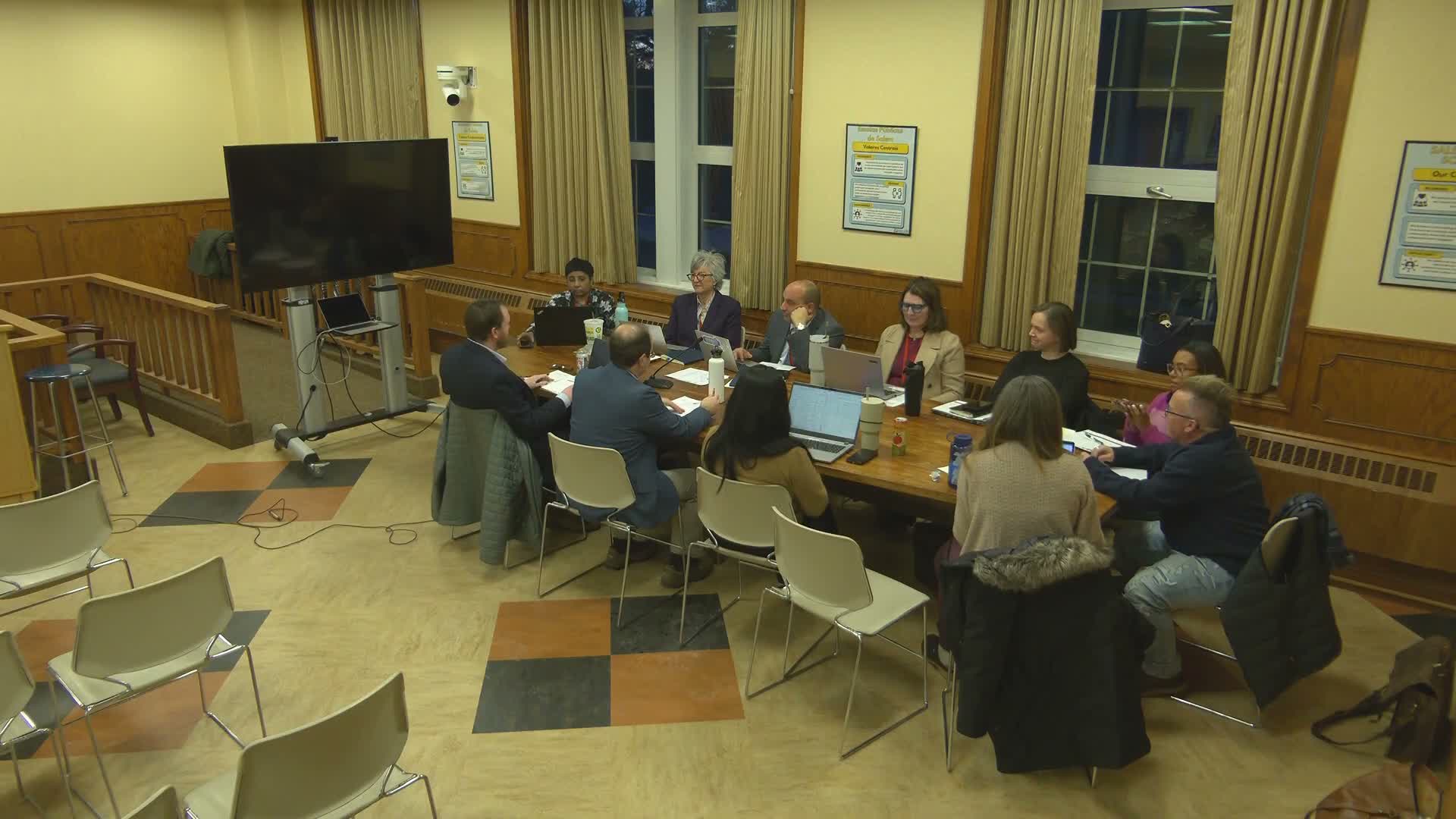
Summary
School and city finance staff told the Salem School Committee Feb. 9 that the Chapter 70 formula and a growing 'added increment' are reducing state aid and increasing pressure on local budgets, even as the governor's FY27 proposal would modestly raise Salem's foundation aid.
Salem school and city finance officials told the School Committee on Feb. 9 that state aid calculations under Chapter 70, coupled with a cumulative "added increment," are leaving the district to cover a greater share of school costs even as the governor’s FY27 proposal modestly increases foundation aid.
James, the district finance director, outlined the Chapter 70 three-step calculation—foundation budget, local contribution requirement and state aid—and said the governor’s January 28 proposal would raise Salem’s Chapter 70 total to $32,890,000 under that recommendation. "The target is 69.52%" for local contribution, James said, with the state covering the remaining 30.48% under the current formula.
The presentation emphasized two structural pressures on the budget: (1) an "added increment" that accelerates required local contribution for districts below the state’s target, and (2) timing and composition of enrollment counts used in aid formulas. Finance staff said the added increment has grown substantially over recent years and is cumulative, reducing aid and increasing the fiscal burden on the city and schools. "That increment is having a particularly negative impact," James said, noting historical charts showing the increment rising and Salem’s Chapter 70 share of foundation falling from the low 40s to about 39%.
Officials cautioned that the October 1 enrollment snapshot used by the Department of Elementary and Secondary Education (DESE) drives aid calculations and can miss students who arrive after that date, a problem for districts with late arrivals. Elizabeth Pauley, assistant superintendent for finance and operations, added that enrollment increases in Salem have not been concentrated in categories that yield higher weights in the Student Opportunity Act—English language learners and certain special-education counts—so a net enrollment rise has not proportionally helped aid calculations.
City-side school-related spending also complicates the picture. Finance staff contrasted DESE’s required net school spending figure (roughly $79.3 million) with what the city reports as total school-related spending in FY26 (about $97.97 million), producing roughly an $18.7 million variance in city-funded school costs that is not captured in Chapter 70 calculations because certain costs (health insurance, some debt service and other assessments) are recorded on the city budget rather than in the school department’s end-of-year report.
Committee members discussed local steps to mitigate the effect, including reviewing whether some city-funded school costs could be shown on the school side of the ledger, comparing DESE reporting practices with other districts that include additional costs on the school budget, and ongoing coordination with state legislators and other affected districts. "It might be worth learning more and certainly ... to get smarter about this," Pauley said, urging the committee to examine whether bookkeeping changes would alter calculated effort and the added increment.
Officials also described operational pressures that will shape the FY27 request: rising healthcare costs, special-education tuition and transportation, and potential new debt service tied to a proposed high school project. Staff outlined the municipal budget calendar—department meetings through mid-March, filing with the city council in May and final budget adoption in June—so any changes to local appropriations will appear in that process.
The committee took no formal funding votes at the special session and adjourned at the close of the briefing. Next procedural steps: staff will continue detail work through mid-March and return with material to inform the FY27 appropriation process.