Get Full Government Meeting Transcripts, Videos, & Alerts Forever!
Get email alerts on the Fossil Shell Inventory topic
No spam. Unsubscribe anytime.
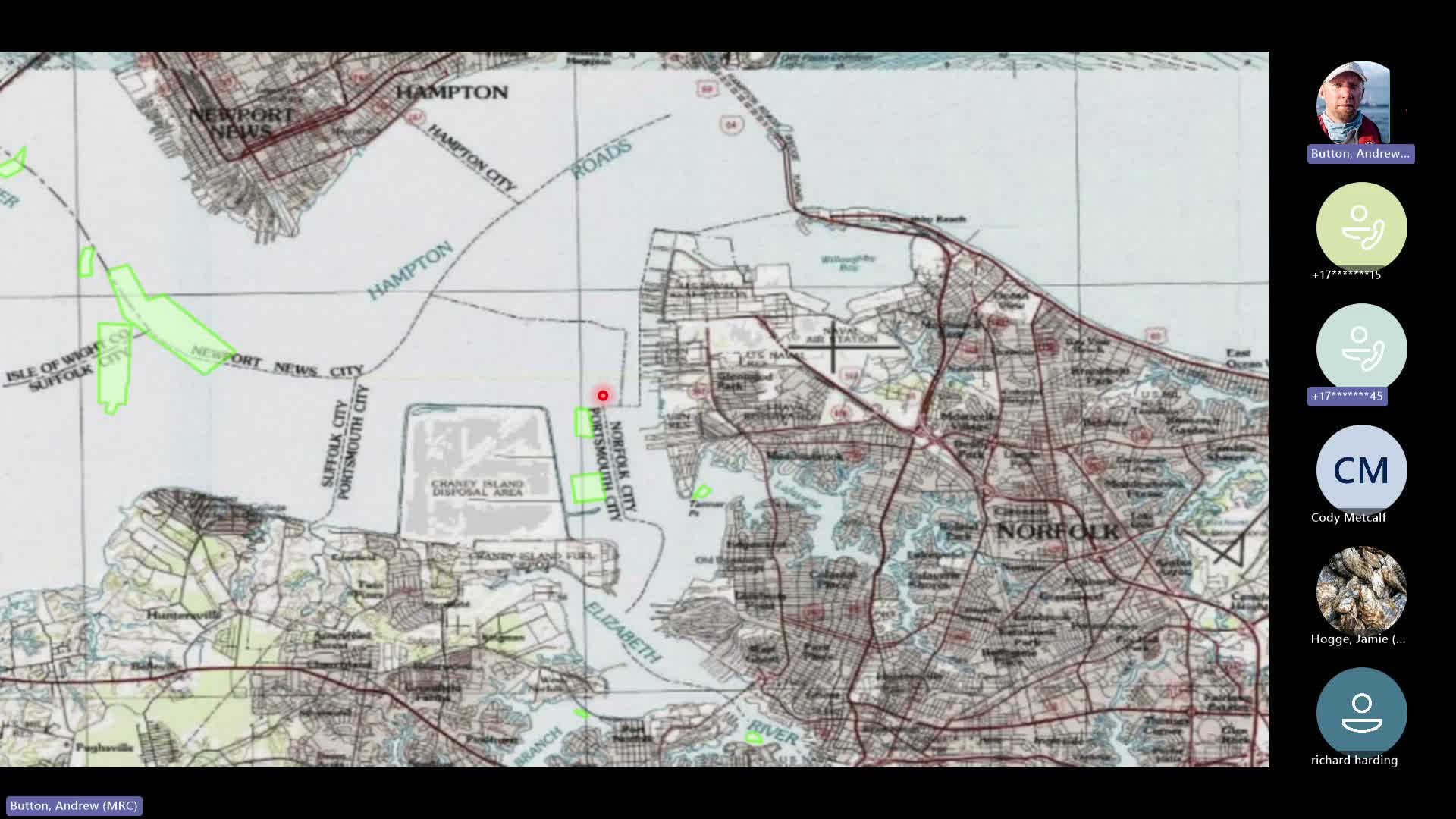
Committee urges inventory before fossil shell extraction at Craney/Caney Island
Summary
SMAC members discussed extracting fossil shell at Craney/Caney Island before planned port expansion covers the deposit, urging better inventory and coordinated mobilization to ensure multi-year supply planning and budget alignment.
Committee members and VIMS representatives raised the need to inventory buried fossil shell before planned port expansion potentially covers known deposits off Craney/Caney Island.
Andrew (VMRC staff) told the committee that a fossil-shell site off Craney Island could be covered within roughly 10 years if Army Corps plans for a shipping terminal proceed, and that VMRC has permits to begin extracting fossil shell. "We have permits in place to start doing that this year," he said, while cautioning more coordinated surveying would inform production capacity.
Roger Mann (Virginia Institute of Marine Science) told the group the committee should catalogue the total buried shell inventory and plan expenditure over multiple years: "One of the things that we should talk about in the future is just how far how big that inventory is," he said, arguing the committee needs a multiyear picture before spending the resource.
Members discussed mobilization costs, survey cores to estimate cutter-head yields, and whether to prioritize extracting fossil shell versus leaving some areas as harvest grounds. Andrew noted that early surveys and physical cores would clarify how productive a site could be once mobilized, and that federal funding opportunities might offset mobilization.
The committee agreed at the staff level that extracting available fossil shell ahead of potential permanent loss is a priority, but members emphasized surveying and fiscal accounting before large-scale mobilization.
Next steps included requesting better inventory data and cost-return analyses to inform whether to accelerate extraction and how to allocate state and potential federal funds across seasons.