
Disability advocates warn House Education committee that rushed governance and funding changes risk denying services
Get AI-powered insights, summaries, and transcripts
Subscribe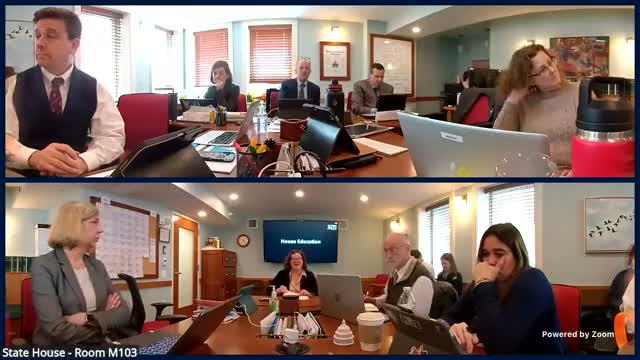
Summary
Disability Law Project and Vermont Legal Aid told the committee that special-education systems lack capacity, described 'no-service' letters and long waits for specialized programs, and urged modeling and safeguards to ensure federal IDEA obligations are met before implementation.
Tammy Naylor (Disability Law Project) and Cammy Naylor (Vermont Legal Aid) testified to the House Education committee on Feb. 11 during Disability Advocacy Day, urging lawmakers to 'write disability rights into every bill' as they consider district consolidation and the foundation formula.
Nut graf: Advocates said the state's special-education delivery system is strained by staffing shortages, long wait lists for specialized programs, and overreliance on paraeducators. They warned that changing funding and governance without explicit protections could lead to students being denied required services and risk noncompliance with federal maintenance-of-effort rules for IDEA funding.
The witnesses described concrete harms they see in the field: districts issuing "no service" letters to families when they cannot provide specified services; frequent use of undertrained paraeducators as substitutes for specialized providers; and significant delays or lack of placement options for students who require intensive services. "There were a number of districts that sent out no service letters to students with disabilities and their families," an advocate said, describing that as a denial of entitled services.
They urged the committee to use JFO and Agency of Education data to model how proposed weights and the foundation formula would affect special-education funding statewide, and asked the Legislature to support BOCES and other cooperative structures to expand specialized services without resorting to privatization. Advocates also cautioned against lifting moratoria on approval of independent schools without robust oversight.
The advocates closed by citing 16 VSA —71 as the state's policy that public education must afford substantially equal basic education and urged caution and phased implementation to avoid unintended harm to students with disabilities.