
Vermont superintendents back a smaller-scale consolidation plan but urge careful timelines, data and construction aid
Get AI-powered insights, summaries, and transcripts
Subscribe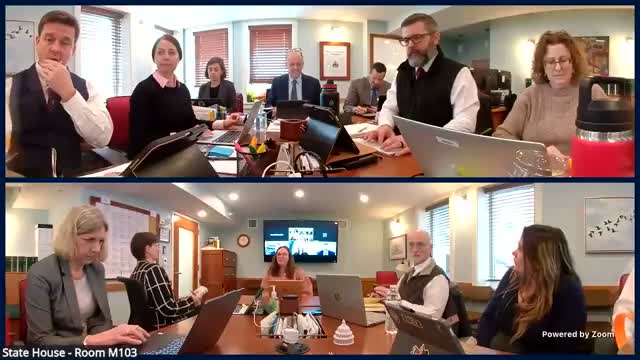
Summary
The Vermont Superintendents Association told the House Education committee a recent 'conversation starter' on district consolidation strikes a better balance than earlier five-district proposals but urged phased implementation, data-driven modeling of fiscal impacts, and targeted school-construction aid.
Chelsea Myers, executive director of the Vermont Superintendents Association, told the House Education committee on Feb. 11 that the VSA views the committee's consolidation "conversation starter" as a more "earnest and grounded starting point" than previous large-scale plans but warned consolidation should not erase local governance.
Myers said the association supports efforts to create school-district structures "that are operationally effective and efficient in the context of Vermont," while continuing to protect democratically elected school boards that remain close to students and communities. "This proposal represents an important turning point in the consolidation conversation," she said.
Nut graf: Superintendents urged the Legislature to back any governance changes with careful analysis and a realistic implementation timeline. They listed specific questions the committee should answer before advancing policy: what new programs or efficiencies larger districts would enable; how transitions would be supported for families, staff and systems; how governance and collective-bargaining alignment would work; and how Act 73's foundation formula and homestead exemptions would affect tax outcomes.
Patrick Reen, superintendent and trustee for the Mount Abraham Unified School District, described operational gains from earlier consolidation efforts and the risks of rushing changes. "We've reduced 43 positions over the last 8 years," Reen said, arguing consolidation gave his district flexibility to move staff across schools to meet needs while controlling costs.
Several superintendents warned implementation requires extensive operational work well before a new district is "live." Lynn Coda of the Franklin Northeast Supervisory Union said mergers demanded months of planning to align curriculum, financial systems, payroll and hiring. Coda also cited health-care costs as a major cost driver: her district's chief financial officer calculated family-plan costs had risen about "235 percent since 2018," a factor the committee should include when modeling savings.
Panelists were receptive to regional cooperative service agencies (often called CSAs or BOCES) as a tool to pool specialized services such as special education and transportation but cautioned that forming effective CSAs depends on enabling legislation, sufficient staffing pools and attention to governance so expertise supplements rather than duplicates district capabilities.
The superintendents repeatedly urged the committee to adopt a phased approach that pairs governance changes with investments in school facilities and technical supports, saying school-construction aid and realistic timelines are prerequisites for reform to produce the intended benefits for students.
The committee did not take formal action; members asked follow-up questions and signaled interest in more granular modeling and local-level impact analysis.