Get Full Government Meeting Transcripts, Videos, & Alerts Forever!
Get email alerts on the School Programs topic
No spam. Unsubscribe anytime.
Washington Elementary highlights community dinners, toy shop and parent ESL classes
Summary
Washington Elementary presented student-led community dinners that served dozens to more than 100 people, a student-initiated toy shop and an adult 'grown-up' shop, and new multilingual (ESL) family classes paired with childcare and meals; staff credited United Way and local donors for support.
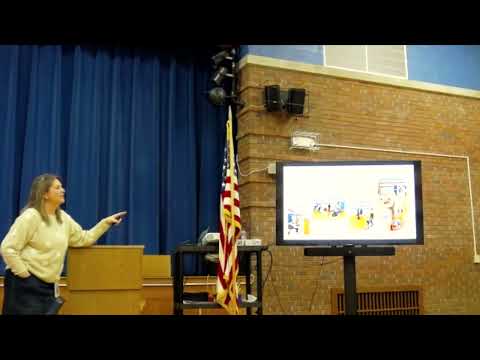
Washington Elementary staff told the Moline-Coal Valley CUSD 40 board on Feb. 9 that a series of student-led outreach efforts have expanded family supports and boosted attendance.
School leaders described four major programs: weekly or monthly community dinners that in some sessions served more than 100 people, a student-initiated toy shop that allowed parents to choose wrapped gifts discretely, a ‘grown-up’ shop of donated items for parents, and multilingual (ESL) classes for parents that include childcare and a meal. The school said donations included bulk ingredients from Riverbend Food Bank and cash gifts of about $1,000 and $500 from local supporters.
The toy shop was presented by a student, Aria, who helped organize donations and a wrapping station that teachers staffed so parents could take gifts home without children seeing them. Staff said the grown-up shop was held in the old library and featured new or gently used items such as purses, books and holiday goods.
Leaders said the multilingual classes launched in January with six to seven parent participants and are run in partnership with United Way, public broadcaster WQPT and Western Illinois University; classes focus on practical vocabulary to help parents talk with children about school topics such as math. United Way on-site coordinator Sierra Yave provided meals and supported outreach, staff said.
The school also described an expanded food and clothing pantry that has served more than 400 families, and attendance incentives (pizza nights, treat carts and weekly lunches for students on an attendance caseload) that staff credited with raising overall attendance to 93.63% year to date and reducing chronic absenteeism on the coordinator’s caseload from roughly 30% to about 21%.
Board members responded positively, asked logistical questions about future events (including a March 4 STEM night with John Deere followed by a planned community dinner), and encouraged other board members to visit classrooms when staff distribute student achievement certificates.
The presentation closed with an invitation for board members to help deliver certificates and a reminder that school leaders plan to continue the family supports through the remainder of the school year.