
Placentia‑Yorba Linda board adopts new immigration‑enforcement response policy after hours of testimony
Get AI-powered insights, summaries, and transcripts
Subscribe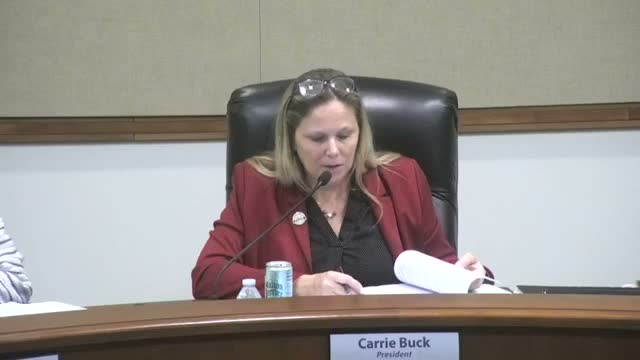
Summary
After more than an hour of public comment and detailed legal review, the board adopted Board Policy 1445 to align with new state requirements on immigration enforcement, directed staff to finalize administrative regulations and training, and deleted older, overlapping policies.
The Placentia‑Yorba Linda Unified School District Board of Education on Tuesday voted 5–0 to adopt Board Policy 1445, a district policy that updates how staff must respond to requests from immigration‑enforcement officers and meets new state reporting and training deadlines.
The policy, presented as a first‑reading and then adopted after discussion, reiterates that district employees shall not solicit or collect information about students’ or families’ immigration status except as required by state or federal law or in response to a valid judicial warrant or court order. It also prohibits granting routine access to nonpublic areas of school property or district transportation without judicial authorization, while adding a risk‑management clause that staff should not obstruct law enforcement actions.
Superintendent Dr. Kim and staff described the change as a compliance measure tied to recent amendments to Education Code section 234.7 and related guidance from the California Department of Education and the state Attorney General. "These updates are about clarity, consistency, and compliance with state law, ensuring that we protect student rights and uphold every student's right to public education," staff said during the presentation.
Board legal counsel Tony DeMarco told trustees the seemingly contradictory language—prohibiting disclosure absent a warrant but advising staff not to obstruct law enforcement—reflects standard risk management and long‑standing legal practice. "Obstruction and interference are defined legal terms; our guidance is intended to keep staff and students safe and to avoid escalation in the moment," DeMarco said, urging that details about how staff should respond be set out in an accompanying administrative regulation and in training.
Trustees pressed staff to change permissive language in the policy about training and procedures to mandatory language in the administrative regulations. One trustee asked that the phrase "may provide training" be changed to "shall provide training" in the ARs so that site staff receive consistent instruction on how to confirm lawful warrants and how to respond during exigent circumstances.
The policy requires the superintendent or designee to notify the board when law‑enforcement officers request access to the district’s records, personnel information, buses or nonpublic areas, and to report such requests in a manner that preserves confidentiality. Staff emphasized that administrative regulations will define procedures for staff, including protocols for consulting legal counsel and local law enforcement when documents presented are unclear.
The board also moved to delete a prior, narrower immigration‑status policy (BP 5145.13) because the new BP 1445 consolidates state‑required protections. Trustees voted to adopt the new policy and to remove the older policy by 5–0.
The adoption comes after more than 50 members of the public spoke during a packed public‑comment period—most urging the board to "keep ICE out of schools" and to prioritize student safety and confidentiality. Many speakers cited AB49 and Education Code 234.7 as the legal foundation for limiting disclosure and access without a judicial warrant.
Next steps: staff will complete detailed administrative regulations and provide mandatory training for site staff on how to identify lawful warrants, how to preserve confidentiality, and how to report any immigration‑enforcement requests to the board in a timely, privacy‑protecting way.