
Residents urge Cathedral City to tighten enforcement as cannabis odors and health concerns persist
Get AI-powered insights, summaries, and transcripts
Subscribe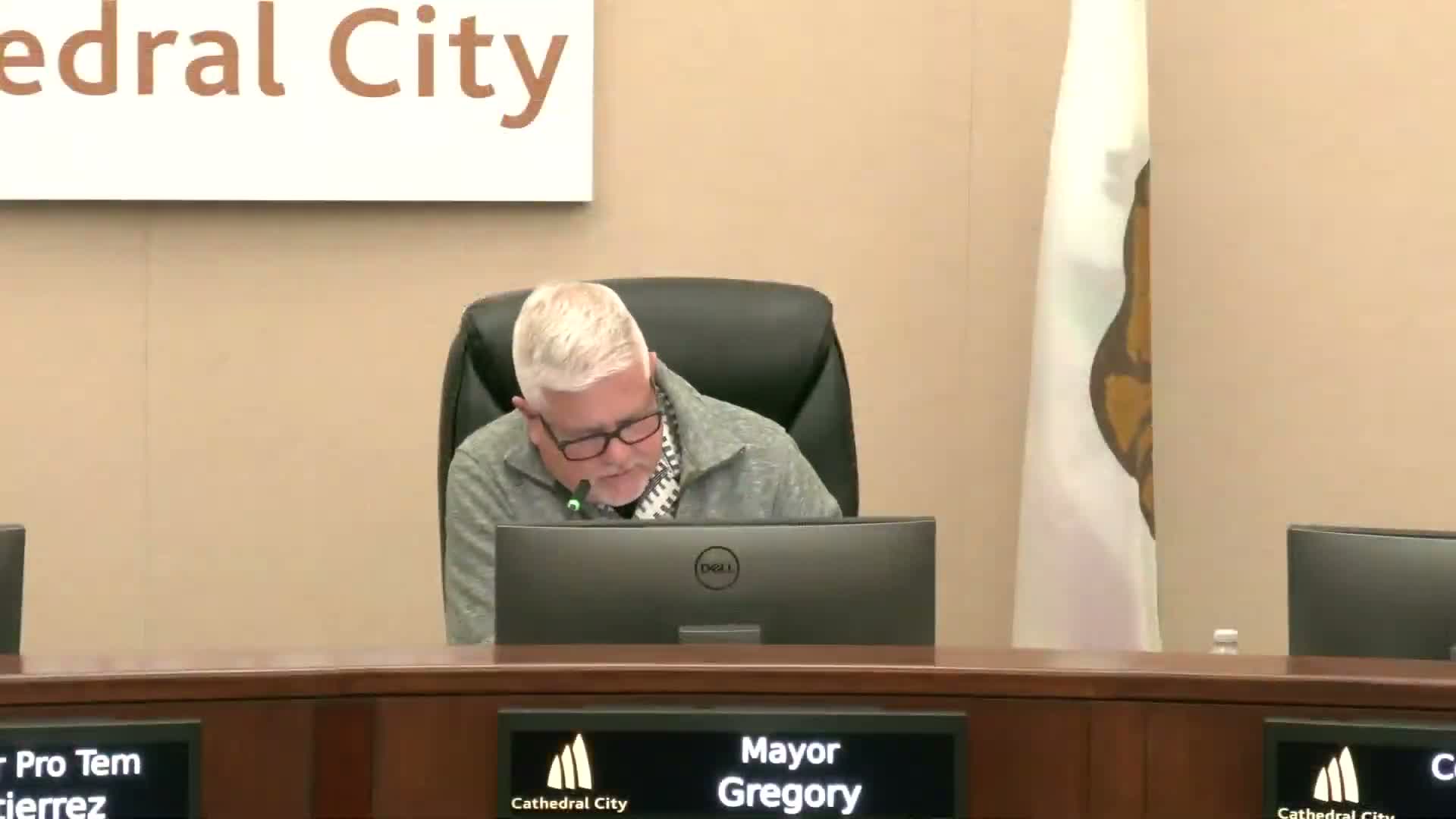
Summary
Several residents told the City Council Feb. 11 that strong cannabis and chemical odors from nearby production facilities are making homes unlivable and raising health concerns; speakers urged faster enforcement of a new odor ordinance, clearer reporting and mandatory engineering controls at facilities.
Dozens of residents told the Cathedral City City Council on Feb. 11 that airborne odors from nearby cannabis cultivation and manufacturing facilities are affecting neighborhood livability and, they said, health.
Dr. Patrick Meehan, a physician and former public‑health official, said hundreds of residents have complained of odors and described plant terpenes and volatile organic compounds as potential respiratory irritants. "It is clear that the odors are passing over the property line and it's imperative that the city immediately and aggressively enforce these ordinances," Meehan said, urging the council to issue cease‑and‑desist orders to any facility that continues to emit odors until engineering controls are installed.
Several speakers from residential neighborhoods offered similar testimony. "I pay property taxes here… My issue today is the smell of weed in Cathedral City. I'm one of the people that not only don't like the smell of weed, I actually get sick — sickened — by the smell of weed," resident Catherine Fuller said. Alicia Meehan said the odors enter her backyard and home from late afternoon into the night and have "made our home unlivable." She added that, in her view, the council had previously issued many licenses to manufacturers and growers near homes and criticized the city's current complaint response process.
Other residents described difficulty filing and following up on odor complaints through the city's reporting system and urged faster on‑site inspections. "I tried to report and it froze up and it won't let me report at all," said Janet Rehm, who told the council her neighborhood continues to be affected.
Speakers highlighted technical fixes they said can limit offsite odors — examples included closed‑loop extraction systems and activated carbon filtration — and asked that the city require such controls during licensing or as a condition of continued operation. Alicia Meehan and Dr. Meehan named solvents including butane and ethanol and expressed concern about other chemical emissions; the precise chemical names cited in public testimony (as read to the council) could not be independently verified from the hearing record and are reported here as described by speakers.
Some public testimony framed the issue as a code‑enforcement problem. Dr. Meehan said he understands the city has an ordinance prohibiting odors beyond a facility's property line and authority to require odor control plans; residents said enforcement and transparency about inspection results and timelines must improve.
The council did not take formal action on the public comments during the Feb. 11 meeting. Council members later described meetings with staff and noted existing ordinances; no new enforcement motion or revision to licensing rules was introduced at this session. The council may consider follow‑up items with staff in a future meeting.