Ridgewood council adopts zoning overlays tied to affordable‑housing obligations amid strong public protest
Loading...
Summary
After more than two hours of public comment, the Ridgewood Village Council voted to adopt a package of overlay zoning ordinances (4071–4075) that officials say preserves the village's legal immunity from developer suits; residents and legal experts warned the measures depart from the master plan and risk litigation.
The Ridgewood Village Council voted Feb. 11 to adopt a set of zoning ordinances including Ordinance 4071, a site‑specific overlay connected to a proposed Kensington senior‑housing project, after extended public comment and heated exchanges with residents.
Residents from across Ridgewood told the council they support affordable housing in principle but argued the ordinances were drafted to favor developers, lacked neighborhood protections and were advanced without adequate, meaningful public deliberation. "I support affordable housing. What I do not support is developer‑driven zoning pushed through diminished neighborhood protections in a process that appears to be coordinated and out of public view," said resident Kalyn Tomaszewski during the public comment period.
Attorney Rocio Berriguete told the council the ordinance "clearly departs from the 2022 master plan" and cited New Jersey municipal land‑use law, NJSA 40:55D‑62(a), saying the council must make written findings on the record to justify any inconsistency with the master plan. "If approvals are granted under an ordinance that lacks statutory compliance, those approvals ... are vulnerable to challenge," she said.
Council members defended their votes as a reluctant response to state law and court precedent. "If we do not enter into this agreement, we lose our immunity to builders' lawsuits," said one council member, explaining that losing that immunity could hand developers the ability to build without regard to local zoning. Council members repeatedly described the choice as between an imperfect local plan and a likely outcome in court that could produce larger, less controlled development.
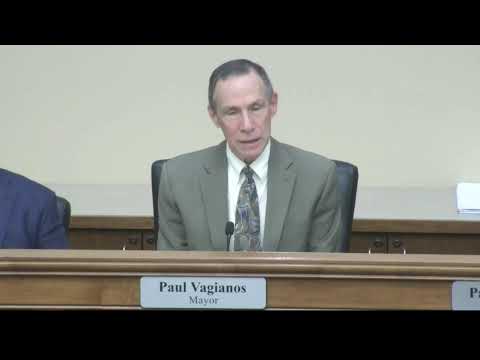
The mayor and village attorney said the planning board had reviewed the ordinances and found them consistent with the master plan. The council also noted that engagement with potential developers is routine under Mount Laurel obligations and that some elements (unit mix, affordable set‑asides and design details) will be reviewed by the planning board at later site‑plan hearings.
Several speakers raised concerns about conflicts of interest tied to campaign contributions. Anne Loving pointed to sizable contributions to two council members and suggested recusals; the mayor recused himself from voting on at least one central business district item but other council members declined to recuse and said disclosures are publicly filed with the Election Law Enforcement Commission.
The council proceeded to read and adopt Ordinances 4071 through 4075 and then moved on to other business including first readings of capital bond ordinances. Council members said the vote secures a 10‑year period of immunity from developer suits, buying the village what one described as time to pursue more proactive solutions.
What happens next: Adopted overlay ordinances set zoning rules that will shape how properties in the affected overlay areas are reviewed by the planning board; site plans for projects such as the Kensington proposal will return to the planning board for detailed review of entrances, traffic mitigation, buffering and other technical elements.