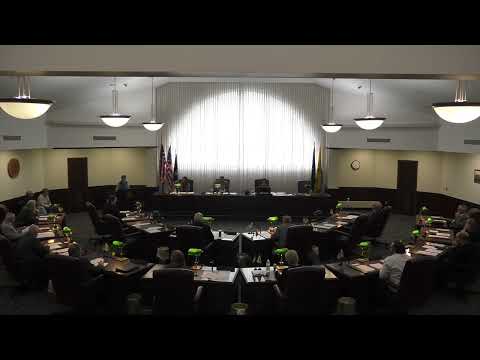
Livingston County adopts local law allowing negotiated sales of county property after contentious public hearing
Loading...
Summary
After public hearings and sustained public comment demanding transparency, the Livingston County Board of Supervisors voted to adopt Local Law B‑2026, which permits the county to lease or sell non‑tax‑foreclosed property through privately negotiated transactions approved by board resolution rather than strictly by competitive bidding.
The Livingston County Board of Supervisors voted to adopt Local Law B‑2026, a measure that allows the county to lease or sell county‑owned real property through privately negotiated transactions approved by board resolution rather than requiring competitive public bidding in every case.
Shannon, a county staff member who spoke during the hearing, summarized the change: “This proposed local law would supersede the county law and permit the county to lease or sell county real property pursuant to a privately negotiated transaction that is approved by board resolution.” She told the board the change is intended to give the county flexibility in situations where title was not acquired through tax foreclosure and where the competitive‑bid process can cause multi‑month delays.
Opponents at the public hearing said the change weakens long‑standing transparency safeguards. Cindy Pon, a Livingston County resident, argued the law would reduce public oversight: “A transparent local government is going to strengthen democracy… decisions are made in good faith,” she said, urging supervisors to keep sales “accessible, fair” and to preserve public scrutiny. Pat Marie of Avon and Barbara Charity of Avon echoed concerns that bypassing competitive bidding could increase opportunities for favoritism.
Clint T. Shirley, who identified himself as a county resident and taxpayer, tied the timing of the proposal to pending litigation. He said the agenda included “a $4,000,000 notice of claim against Livingston County” and urged the board to table the law until the legal analysis and independent appraisals could be released.
Supporters on the board said the law retains public checks: the county would still have to determine that property is not required for public use and any negotiated transaction would be handled openly as an action item on the agenda, beginning in committee and subject to full board vote. Several supervisors said the law was carefully vetted in committee and could streamline needed transactions without eliminating public votes.
The transcript records a roll‑call outcome for the motion to proceed and subsequent adoption. According to the meeting record, the roll calls were recorded and the measure was declared adopted (transcript roll‑call tallies recorded in the minutes as presented at the meeting). The chair stated the measure would be entered as Local Law 2026 and the board completed the procedural motions needed for its adoption.
What happens next: Board members said any individual negotiated sale or lease would still return to committee and the full board for public action; opponents asked that legal opinions, appraisal summaries and conflict‑of‑interest screenings be published to the record before specific transactions move forward.
The board left the public hearings open earlier in the meeting to receive comments and then closed them before taking the final vote. The meeting record shows the public’s objections have been entered into the official minutes and several written objections were requested to be made part of the record.