
Regional planners tell House Transportation Committee flood repairs outpace town budgets; inventories speed reimbursement
Get AI-powered insights, summaries, and transcripts
Subscribe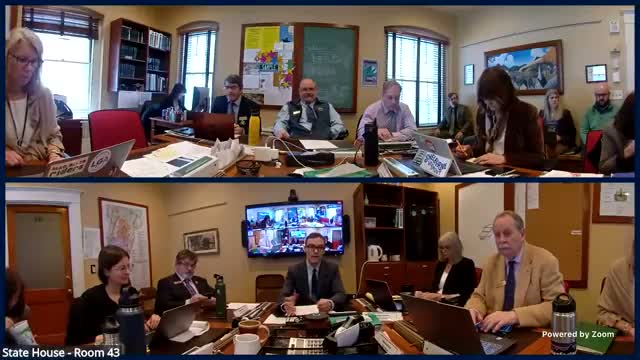
Summary
Central Vermont planners told the House Transportation Committee that post‑flood road, culvert and bridge damage has left towns with multi‑million dollar repair needs and urged easier access to VTrans and federal grant programs; inventories, they said, help prioritize projects and support FEMA reimbursement claims.
Christian Meyer, executive director of the Central Vermont Regional Planning Commission, told the House Transportation Committee on Feb. 11, 2026 that many towns in his region are managing significant highway damage from recent flooding and lack the capital to keep up with repairs.
"Everyone wants to know when the dump trucks full of money are coming to their town," Meyer said, describing a widespread expectation that state or federal aid will cover major repairs. He told the committee that Middlesex faced about $2,000,000 in road damage after the 2023–24 storms — roughly four times the town’s annual budget — and that smaller towns cannot absorb that cost without external assistance.
Meyer said the Central Vermont RPC has conducted culvert and bridge inventories — cataloging diameter, length and condition — so municipalities can prioritize upsizing and replacement. "You can download that database tomorrow and have a clear spreadsheet," he said, adding inventories ease FEMA and federal reimbursement by showing what existed before a replacement.
Committee members asked whether RPC inventories include hydrologic sizing; Meyer said the base inventories record condition and dimensions but do not routinely include hydraulic modeling. He said tabletop modeling and grant‑funded analysis (up to 36‑inch culverts in some municipal planning grants) are used where municipalities pursue project prioritization and upsizing.
Members and staff discussed federal funding pathways. Meyer said VTrans remains the primary channel for municipal bridge funding on the federal‑aid network and that RPCs often help write applications for discretionary USDOT grants. He cautioned that permitting and interagency reviews — including Army Corps of Engineers and FEMA processes on wetland or drainage issues — can extend project timelines for multiyear projects.
Meyer emphasized municipal technical assistance as a practical tool: inventories, prioritization and local project management that help smaller towns prepare applications and manage complex permitting. The committee did not take formal votes on funding changes during the session. The committee is expected to consider budget and policy choices related to municipal grant access in future meetings.