Get Full Government Meeting Transcripts, Videos, & Alerts Forever!
Get email alerts on the Compensation And Budget topic
No spam. Unsubscribe anytime.
Jonas Charter board adopts 2026–27 salary schedules, funding plan requires cuts or reserve use
Summary
Board approved new 2026–27 salary schedules that raise teacher and staff pay; the package costs an estimated $1.29 million ongoing and administrators said it will require $700K–$800K in budget reductions or use of reserves unless additional state funds materialize.
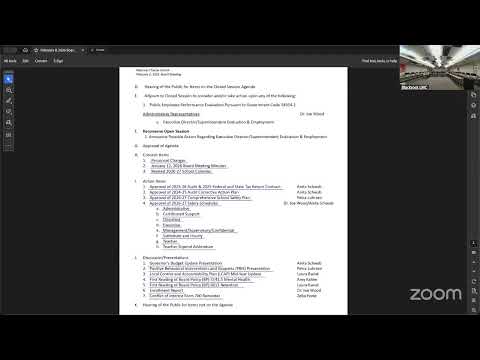
The Jonas Charter School Board on Feb. 9 approved revised salary schedules for the 2026–27 school year intended to improve recruitment and retention by increasing pay across employee groups, with larger step changes for early-career teachers.
Dr. Joe (executive director/administrative representative) told the board compensation is the district’s largest expenditure — "employee compensation is actually the single biggest thing that we spend money on every single year" — and that the proposed package would cost about $1.29 million in ongoing funds. He said the administration expects approximately $500,000 in COLA-related revenue under current projections and must identify roughly $793,000 in cuts or new revenue to avoid drawing on reserves.
Key elements of the approved changes include a general 2% across-the-board starting point followed by targeted adjustments: increases to teacher steps producing an average step change of about 5.9% year-over-year (with early-career teachers seeing average increases near 14.6%), an increase in the master’s-degree stipend from $1,500 to $2,500, and adjustments to classified and administrator schedules to keep low-paid hourly roles at or above fast-food minimum wage levels.
Staff estimated ongoing certificated costs at about $1,000,000 and classified ongoing costs near $250,000; retirement (STRS/PERS) contributions account for a material portion of those totals. The board discussed funding options, including finding internal expenditure reductions and relying on possible state budget increases (special-education equalization, one-time discretionary funds or higher-than-projected COLA). The board has a salary-and-benefits reserve of $1.8 million; staff said a worst-case projection might use roughly $450,000 of that reserve over three years if cuts are not fully realized.
Board members asked how quickly proposed cuts could be identified and whether the proposed increases would position the school competitively in the Natomas area’s labor market; Dr. Joe said the plan would place the school near the top of local comparators, likely second behind one competitor depending on final collective bargaining outcomes in neighboring districts.
The board approved the salary schedules by roll call vote. Staff will incorporate the changes into next year’s budget and continue to identify budget reductions or additional revenue sources to cover the ongoing costs.
Next procedural steps include finalizing the budget assumptions pending the May Revise, implementing the payroll/schedule changes for 2026–27, and reporting back to the board on identified budget reductions or additional revenue.