
Committee hears evidence of teacher-quality gaps, Title I disparities and state intervention tools
Get AI-powered insights, summaries, and transcripts
Subscribe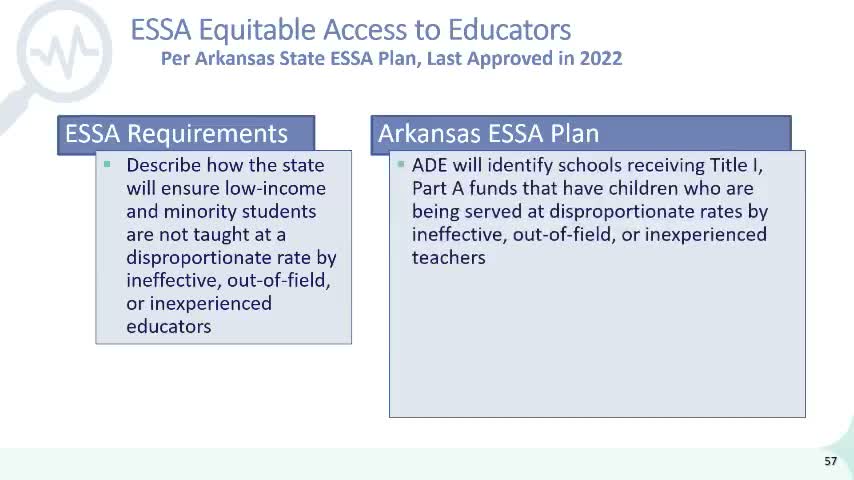
Summary
Bureau presenters told lawmakers Title I and high-poverty schools have higher rates of provisional/emergency credentials and less experience; briefing also described district support levels 1–5, level-5 state authority, and fiscal/facilities distress procedures.
Presenters told the Joint Education Committee that measures of teacher qualifications and experience differ substantially between high-poverty/Title I schools and low-poverty schools, and that the accountability act provides tools to escalate supports up to state authority.
Adrienne Beck reviewed equitable access metrics in Arkansas's ESSA plan and State Accountability Act: percentages of teachers deemed effective under the statewide evaluation (TESS), inexperienced teachers (first three years), and emergency or provisional credentials. Beck said DESE report-card data show higher rates of emergency/provisional credentials and lower average years of experience in high-poverty and high-minority Title I schools.
The Bureau also explained the state's district-support classification system (levels 1'5). Level 1 provides guidance and contacts; level 5 is the highest support level and requires state-board approval and may be followed by action that places a district under state authority and permits removal of a superintendent or board. Presenters noted five districts are currently classified as level 5 and that districts placed under state authority tend to have lower Atlas proficiency percentages than statewide averages.
On fiscal and facilities oversight, staff described the fiscal-distress process (early intervention, monitoring, state-board classification) and reported that currently no districts are in fiscal distress but four are in early intervention and several districts remain under monitoring after prior state authority. Facilities distress placement is rare; only one district had ever been placed in facilities distress and was removed in 2009.
Members asked for lists of district and school letter grades, a breakdown of which schools were exempt from letter grades, geographic shortage district data, and whether teacher-salary increases and recruitment programs have affected retention in shortage areas. Staff agreed to provide the requested lists and additional data and to include the department in a future meeting to answer follow-up questions.