Get Full Government Meeting Transcripts, Videos, & Alerts Forever!
Get email alerts on the Neighborhood Grants topic
No spam. Unsubscribe anytime.
Grand View Hills’ $1,000 pollinator grant yielded an 83% survival rate but required heavy volunteer effort
Summary
Neighborhood leaders told the Bloomington Commission on Sustainability that a $1,000 sustainable-neighborhood grant enabled pollinator gardens but required substantial volunteer time, neighborhood matching funds and technical assistance; the reported plant survival through October 2025 was about 83%.
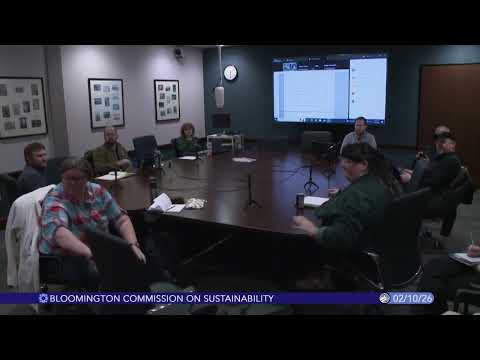
Neighborhood volunteers from Grand View Hills presented results of a sustainable-neighborhood pollinator grant to the Bloomington Commission on Sustainability, saying a $1,000 city grant (awarded late 2024, implemented in 2025) plus neighborhood matching funds supported pollinator gardens at several homes and produced measurable ecological and social benefits — but also exposed hidden costs.
A resident who presented the project said neighbors ordered roughly 240 two-inch plugs from Prairie Moon Nursery for six households and that the neighborhood match extended participation. The project’s formal success metric for the grant was plant survival through the October 2025 reporting period; the presenter reported that about 83% of the planted material remained alive at the October reporting cutoff. Commissioners noted variation among sites — some gardens saw survival rates near 90%, others closer to 50% — due to weather and site-specific factors.
Presenters emphasized the labor and logistical demands of running the grant: volunteer time to prepare and submit the application, coordination for photographing and uploading documentation, physical bed preparation, ongoing weeding and watering, and occasional paid contractor help (mulch, sod removal, fencing). Presenters said some households paid out-of-pocket for supplies or hired landscapers; others relied on neighbor-to-neighbor sharing of tools and plant knowledge.
The grant yielded clear neighborhood benefits beyond plant survival. Presenters described increased pollinator sightings (monarch caterpillars, hummingbirds), more neighbor-to-neighbor communication and social cohesion, and spin-off activities such as honeysuckle removal and shared milkweed seed collection. Commissioners suggested the city could lower access barriers by simplifying application language, offering technical assistance for grant-writing and clarifying reporting requirements.
"The grant application and then the subsequent follow-up was a tremendous amount of work for the neighbors in our community that worked on that," the presenter said, urging staff to consider additional supports to expand access citywide.
Commissioners praised the project and encouraged the presenters to share their model and documentation on the city’s ESD site so other neighborhoods could replicate the approach. Staff said the sustainable-neighborhood grant program had reopened for new applications.