House panel advances medical-cannabis changes to shift licensing to UDAF, define low‑THC pharmacy products
Loading...
Summary
The House Natural Resources, Agriculture and Environment Committee on Feb. 11, 2026, approved Substitute 2 to HB 3 89, which moves many licensing duties to the Utah Department of Agriculture and Food, defines low‑THC products processed in licensed facilities as medical cannabis, and adds a $1.50 transaction fee to fund regulation.
Representative Provo presented Substitute 2 to HB 3 89 on Feb. 11, telling the House Natural Resources, Agriculture and Environment Committee the measure professionalizes the program’s licensing board and transfers much of the licensing work from the Department of Health and Human Services to the Utah Department of Agriculture and Food (UDAF).
The sponsor said the bill responds to an Office of Legislative Auditor (OLAG) audit and aims to preserve patient access to low‑THC products (0.3% THC or less) that are manufactured and tested in licensed facilities. “All of the processors that are licensed in our medical cannabis program undergo strict regulation, testing, transparency, [and] accountability through the Department of Agriculture and Food,” the sponsor said.
Dr. Brandon Forsyth of UDAF described operational effects: pharmacies carrying tested low‑THC products can keep patients connected to health care providers, while professionalizing the licensing board should ease burdens on volunteer reviewers. He told the committee the OLAG audit yielded useful recommendations and the bill addresses most concerns.
Public commenters expressed contrasting views. Walter Plumb of Drug Safe Utah said virtual visits in the bill and expanded telehealth risk weaker oversight and argued medicinal cannabis remains unproven for most indications. In response, Representative Provo said the bill targets the licensed medical program, not recreational use, and noted there is “zero evidence” children are obtaining cannabis through the medical program. Desiree Hennessy of the Utah Patients Coalition said telehealth primarily helps rural, homebound and disabled patients and cited a 58% reported decline in teen usage in Utah’s program since its start.
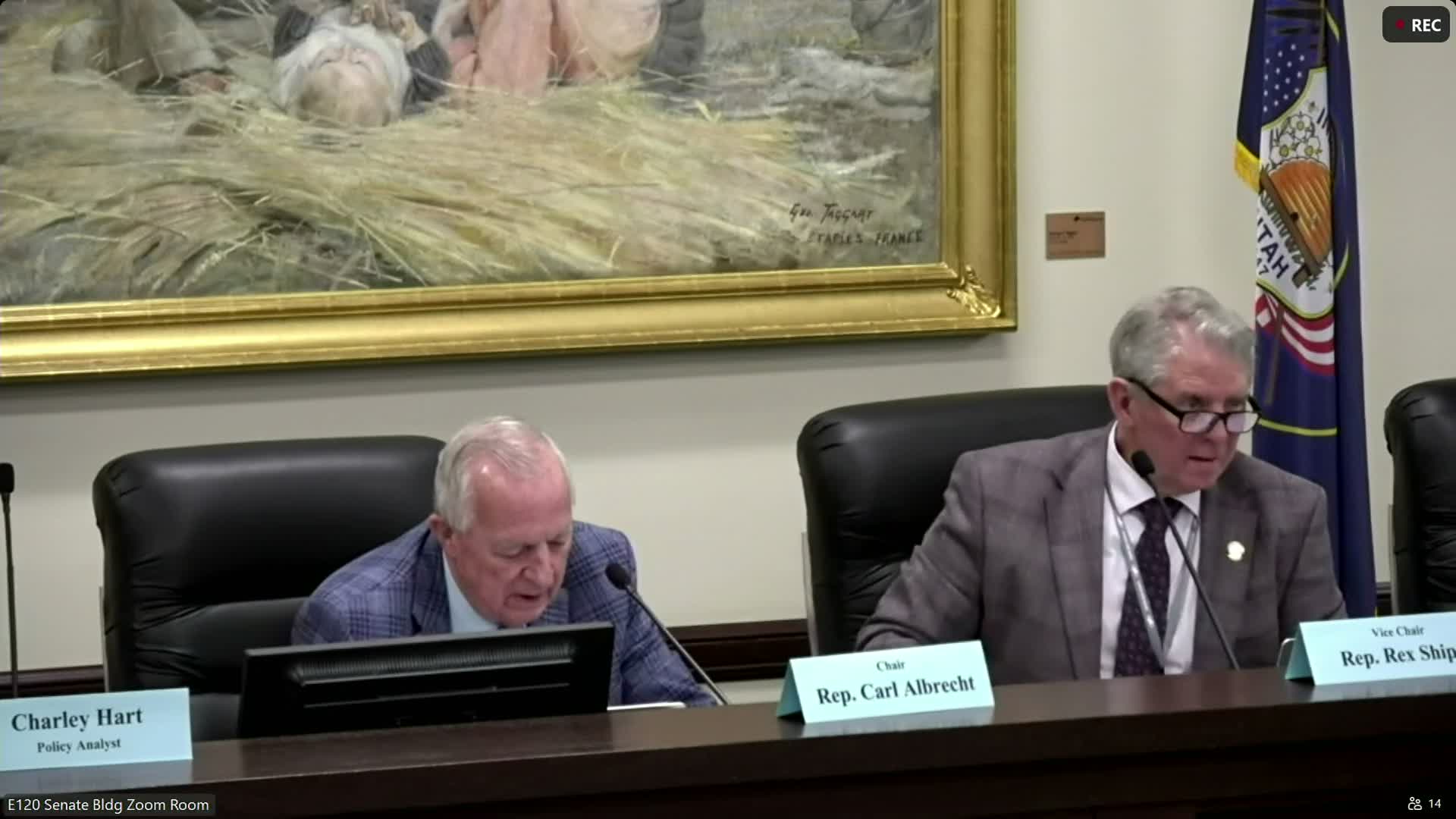
On committee action, Representative Watkins moved to adopt Substitute 2, and the committee then voted to move HB 3 89 (second substitute) out of committee with a favorable recommendation. One member, Representative Shipp, registered opposition on the record during the final vote.
What’s next: HB 3 89, Sub 2 will leave committee with a favorable recommendation and proceed through the legislative process; the sponsor said the bill is intended to refine the program and expects additional changes in future sessions.